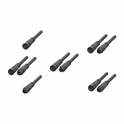
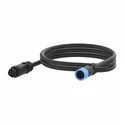
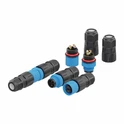
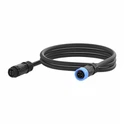
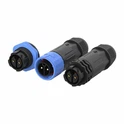
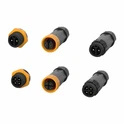
Waterproof connectors are key electronic components widely used in industrial equipment, automotive manufacturing, and outdoor communications. Their waterproof performance directly impacts the reliability and service life of the equipment. To ensure product quality, a rigorous inspection process is essential. The following are standard inspection steps for waterproof connectors.
First, a visual inspection is performed. Verify visually or with a magnifying glass that the connector surface is free of cracks, deformation, or burrs, and that the sealing ring is properly installed and undamaged. Dimensional measurements are then performed, using precision instruments to verify that the interface dimensions meet design standards and ensure a perfect fit with the supporting equipment.
Waterproof performance testing is a key step. Air tightness testing typically uses the pressure decay method. This involves placing the connector in a sealed chamber, filling it with dry gas at a certain pressure, and measuring the pressure change over a set period of time to determine if there are any leaks. A water pressure test simulates actual operating conditions by immersing the connector in water to a specified depth for a set period of time to check for water ingress.
Insulation resistance and withstand voltage tests are equally critical. A high-precision insulation resistance tester is used to measure the insulation performance of the connector in both normal and humid environments to ensure electrical isolation. The withstand voltage test applies AC current exceeding the rated voltage for a specified duration to verify the connector's resistance to electrical breakdown.
Mechanical performance testing includes insertion and extraction force testing and vibration testing. The insertion and extraction force test assesses the connector's contact stability after repeated insertion and extraction, while the vibration test simulates the vibration environment experienced during transportation or use to ensure connection security.
Finally, environmental adaptability tests, such as high-temperature and high-humidity tests and salt spray tests, are conducted to verify the connector's long-term reliability under extreme conditions. All test data is carefully recorded and analyzed, and only products that pass all test items are released.
Through this systematic testing process, the stable performance of waterproof connectors can be effectively guaranteed, providing reliable support for downstream applications.