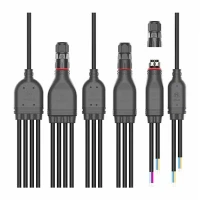
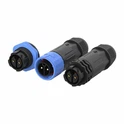
Hey there! As a supplier of bulk shunt connectors, I often get asked if these connectors are suitable for high - power applications. Well, let's dig into this topic and find out.
First off, let's understand what bulk shunt connectors are. These connectors are designed to handle multiple electrical connections in a single unit. They're great for situations where you need to connect a bunch of wires together quickly and efficiently. They come in different shapes, sizes, and configurations, which gives you a lot of flexibility depending on your specific needs.
Now, when it comes to high - power applications, there are a few key factors we need to consider. Power in an electrical system is calculated by multiplying voltage and current (P = VI). So, for high - power applications, we're typically dealing with either high voltage, high current, or both.
Current - Carrying Capacity
One of the most important aspects of a connector in a high - power application is its current - carrying capacity. Bulk shunt connectors are available in various current ratings. Some can handle only a few amps, while others are designed to carry much higher currents.
If you're working on a high - power project, you need to make sure the connector you choose can handle the current without overheating. Overheating can cause a lot of problems, like melting the insulation, damaging the connector itself, and even posing a fire hazard.
For example, in a high - power industrial motor control system, the current can be quite high. You'd want to select a bulk shunt connector with a high current rating to ensure safe and reliable operation.
Voltage Rating
Voltage is another crucial factor. High - power applications often involve high voltages. Bulk shunt connectors have voltage ratings too, and it's essential to match the connector's voltage rating with the voltage of your system.
If the voltage exceeds the connector's rating, it can lead to arcing, which can damage the connector and disrupt the electrical circuit. In some cases, it can even cause electrical shock, which is extremely dangerous.
Let's say you're working on a high - voltage power distribution system. You need to pick a bulk shunt connector that can handle the specific voltage of the system to avoid any issues.
Material and Construction
The material and construction of bulk shunt connectors play a big role in their suitability for high - power applications. Connectors made from high - quality materials can better withstand the heat and stress associated with high - power operation.
For instance, connectors with copper or silver - plated contacts have lower resistance, which means less power is lost as heat. This is especially important in high - power applications where even a small amount of power loss can add up over time.
The insulation material also matters. It should be able to withstand high temperatures and prevent electrical leakage. Some connectors use special insulating materials that are designed for high - power and high - voltage applications.
Environmental Considerations
High - power applications can sometimes be in harsh environments. Bulk shunt connectors need to be able to handle these conditions. For example, if the application is outdoors or in a wet environment, you'll need a waterproof connector.
We offer some great waterproof options, like the M15 F Type Waterproof Connector, the T Molding Type Waterproof Connector, and the Y Type Waterproof Connector. These connectors are designed to keep water out and ensure reliable operation even in tough conditions.
Advantages of Bulk Shunt Connectors in High - Power Applications
There are several advantages to using bulk shunt connectors in high - power applications. Firstly, they offer a convenient way to connect multiple wires. Instead of making individual connections, you can use a single connector, which saves time and reduces the risk of errors.


Secondly, they can be more cost - effective in the long run. Since they're designed to handle high currents and voltages, you don't have to replace them as often as lower - quality connectors. This can save you money on maintenance and replacement costs.
Limitations
However, bulk shunt connectors aren't always the best choice for every high - power application. In some cases, the size of the connector might be a limitation. If you're working in a tight space, a large bulk shunt connector might not fit.
Also, some high - power applications require very precise electrical connections. In these cases, you might need a more specialized connector that offers better control over the electrical parameters.
Making the Right Choice
So, how do you decide if bulk shunt connectors are suitable for your high - power application? Here are some steps you can take:
- Understand your requirements: Figure out the current, voltage, and environmental conditions of your application. This will help you narrow down your options.
- Check the ratings: Look at the current and voltage ratings of the connectors. Make sure they can handle the power requirements of your system.
- Consider the environment: If your application is in a harsh environment, choose a connector that can withstand those conditions, like a waterproof connector.
- Evaluate the size and fit: Make sure the connector will fit in the available space and that it's easy to install and maintain.
As a supplier of bulk shunt connectors, I'm here to help you make the right choice. If you have any questions or need more information about our products, feel free to reach out. Whether you're working on a small high - power project or a large - scale industrial application, we have the connectors to meet your needs.
If you're interested in purchasing bulk shunt connectors for your high - power application, don't hesitate to contact us for a quote and to discuss your specific requirements. We're committed to providing high - quality products and excellent customer service.
References
- Electrical Engineering Handbook, Third Edition
- Power Electronics: Converters, Applications, and Design, Third Edition