Can a Y Type Connector be Used in Telecommunications?
As a supplier of Y type connectors, I've been frequently asked about the applicability of these connectors in the telecommunications industry. In this blog, I'll delve into the technical aspects, advantages, and potential challenges of using Y type connectors in telecommunications, and provide some real - world insights.
Technical Aspects of Y Type Connectors
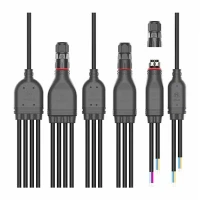
Y type connectors, as the name suggests, have a Y - shaped structure. This design allows one input to be split into two outputs or, in some cases, two inputs to be combined into one output. The basic principle behind their operation involves the transfer of electrical signals through conductive pathways within the connector.
In the context of telecommunications, signals are often in the form of electrical or optical impulses. Y type connectors can be designed to handle both types of signals. For electrical signals, they are typically made of high - quality conductive materials such as copper or silver - plated copper to minimize signal loss and ensure efficient transmission. The insulation materials used around the conductive parts are chosen for their electrical properties, providing protection against electrical interference and short - circuits.
For optical signals, Y type connectors are made with precision - engineered optical fibers and connectors. These fibers are designed to transmit light with minimal attenuation, allowing for long - distance and high - speed data transmission. The connectors are polished to a high degree to ensure a proper alignment of the optical fibers, which is crucial for maintaining signal integrity.
Advantages of Using Y Type Connectors in Telecommunications
-
Signal Splitting and Combining
One of the most significant advantages of Y type connectors in telecommunications is their ability to split or combine signals. In a telecommunications network, there may be a need to distribute a single signal to multiple devices or to combine signals from different sources. For example, in a local area network (LAN), a single broadband signal can be split using a Y type connector to serve two or more computers simultaneously. This not only simplifies the network infrastructure but also reduces the cost of installation. -
Flexibility in Network Design
Y type connectors offer great flexibility in designing telecommunications networks. They can be easily integrated into existing systems, allowing for the expansion and modification of networks without significant re - wiring. For instance, in a large - scale data center, Y type connectors can be used to connect multiple servers to a single network switch, providing a more efficient and organized way to manage network traffic. -
Cost - Effectiveness
Compared to other types of connectors or signal distribution methods, Y type connectors are generally more cost - effective. They are relatively simple in design and can be mass - produced, which reduces the manufacturing cost. This cost - saving is passed on to the end - users, making them an attractive option for both small - scale and large - scale telecommunications projects.

Potential Challenges
-
Signal Loss
One of the main challenges associated with using Y type connectors in telecommunications is signal loss. When a signal is split, its strength is divided between the output ports. This can result in a weaker signal at each output, which may affect the performance of the connected devices. To minimize signal loss, high - quality Y type connectors with low insertion loss should be used. Additionally, signal amplifiers may need to be installed at appropriate points in the network to boost the signal strength. -
Compatibility Issues
Another challenge is compatibility. Different telecommunications devices and systems may have different requirements for connectors, such as impedance, voltage, and signal frequency. It's essential to ensure that the Y type connector used is compatible with the devices and systems it will be connected to. Otherwise, it may lead to poor signal quality, data errors, or even device malfunctions. -
Environmental Factors
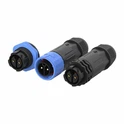
Telecommunications networks are often exposed to various environmental conditions, such as moisture, dust, and extreme temperatures. These factors can have a negative impact on the performance and lifespan of Y type connectors. For example, moisture can cause corrosion of the conductive parts, leading to signal degradation. To address this issue, waterproof and environmentally protected connectors, like the T Molding Type Waterproof Connector and M15 F Type Waterproof Connector, can be considered. Our Y Type Waterproof Connector is also designed to withstand harsh environmental conditions, ensuring reliable performance even in challenging situations.
Real - World Applications
Y type connectors are widely used in various telecommunications applications. In mobile phone networks, they are used to connect multiple antennas to a single base station, allowing for better signal coverage and reception. In satellite communications, Y type connectors are used to split and combine signals between different satellite components, enabling efficient data transfer.
In home and office networks, Y type connectors are commonly used to connect multiple devices to a single internet source. For example, a Wi - Fi router can be connected to a Y type connector, which then splits the signal to connect multiple laptops, smartphones, and smart home devices.
Conclusion
In summary, Y type connectors can indeed be used in telecommunications, offering several advantages such as signal splitting and combining, flexibility in network design, and cost - effectiveness. However, they also face challenges such as signal loss, compatibility issues, and environmental factors. By choosing high - quality connectors and taking appropriate measures to address these challenges, Y type connectors can be a valuable addition to telecommunications networks.
If you are interested in learning more about our Y type connectors or exploring how they can be used in your telecommunications projects, we invite you to reach out for procurement and further discussions. Our team of experts is ready to assist you in finding the right solutions for your specific needs.
References
- "Telecommunication Systems Engineering" by John G. Proakis and Masoud Salehi.
- "Fiber Optic Communication Technology" by Govind P. Agrawal.
- Industry reports on telecommunications connectors from market research firms.