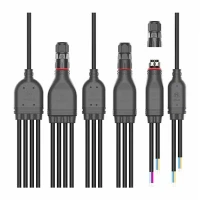
As a supplier of T-type connectors, one question that frequently comes up in our business interactions is whether T-type connectors can be reused. This topic is not only crucial for our customers' cost - effectiveness but also for understanding the overall lifecycle and durability of these important components.
Understanding T - type Connectors
T - type connectors are a widely used type of connector in various industries due to their unique design and functionality. They are characterized by their "T" shape, which allows for multiple connections to be made in a compact space. This makes them ideal for applications where space is limited or where multiple circuits need to be joined efficiently.
These connectors are used in a diverse range of fields such as automotive, aerospace, marine, and industrial automation. For instance, in automotive wiring harnesses, T - type connectors can be used to split a single wire into multiple branches, enabling power or signal transmission to different components. In industrial automation, they help in connecting sensors, actuators, and control units, facilitating seamless communication between different parts of a system.
Factors Affecting Reusability
Mechanical Wear and Tear
One of the primary factors that determine whether a T - type connector can be reused is mechanical wear. Every time a connector is mated and unmated, there is a certain amount of friction between the contact pins and sockets. Over time, this friction can cause the metal surfaces to wear down. As the contact materials wear, the conductivity of the connector may decrease, leading to issues such as signal loss or power failure.
For example, if a T - type connector is used in a high - vibration environment, like in a car engine compartment or an industrial machinery, the constant shaking can exacerbate the mechanical wear. The repeated movement can loosen the connection, causing the contacts to move within the housing and wear out more quickly.
Environmental Exposure
The environment in which the T - type connector operates also plays a significant role in its reusability. Connectors exposed to harsh conditions such as high temperatures, humidity, chemicals, or dust are more likely to suffer from degradation.
High temperatures can cause the plastic housing of the connector to expand and contract, potentially leading to cracks or deformation. This can compromise the integrity of the connection and make it difficult to reuse the connector. Humidity can cause corrosion on the metal contacts, which reduces their conductivity. Chemicals, such as solvents or acids, can eat away at the materials of the connector, rendering it useless.
Electrical Stress
Electrical stress, including over - voltage, over - current, and electrical arcing, can also impact the reusability of T - type connectors. Over - voltage or over - current can cause the contacts to overheat, leading to melting or damage to the insulation. Electrical arcing, which occurs when there is a sudden discharge of electricity between the contacts, can erode the metal surfaces and create pits or rough spots.
Assessing Reusability
Visual Inspection
Before deciding to reuse a T - type connector, a thorough visual inspection is necessary. Check the connector for any visible signs of damage, such as cracks in the housing, bent or broken pins, or corrosion on the contacts. If the housing is cracked, it may not be able to provide proper insulation or mechanical support for the contacts. Bent or broken pins can prevent a proper electrical connection, and corrosion can significantly affect the conductivity.
Electrical Testing
Electrical testing is another crucial step in assessing reusability. Use a multimeter to measure the resistance between the contacts. A significant increase in resistance may indicate a problem with the connection, such as a poor contact or damaged conductors. You can also test for continuity to ensure that the electrical path is intact.
In some cases, more advanced testing equipment may be required, such as a network analyzer for high - frequency applications. This can help detect any signal degradation or impedance mismatches that may not be apparent through simple resistance measurements.


Our Products and Reusability
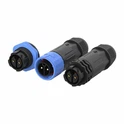
As a T - type connector supplier, we offer a variety of high - quality products. For example, our M16 Straight Type Waterproof Connector, M20 Straight Type Waterproof Connector, and M18 Straight Type Waterproof Connector are designed with durability in mind.
These connectors are made from high - grade materials that are resistant to mechanical wear, environmental exposure, and electrical stress. The waterproof design ensures that they can be used in wet or humid environments without the risk of corrosion. The precision - machined contacts provide a reliable electrical connection, and the robust housing protects the internal components from damage.
Case Studies
Let's look at some real - world examples of T - type connector reuse. In a large manufacturing plant, a maintenance team was faced with the task of upgrading a control system. Instead of replacing all the connectors, they decided to assess the reusability of the existing T - type connectors.
After a thorough visual inspection and electrical testing, they found that approximately 70% of the connectors were still in good condition and could be reused. By reusing these connectors, the plant was able to save a significant amount of money on new components and reduce the overall downtime of the system.
In another case, an automotive repair shop needed to replace a faulty sensor in a car. The sensor was connected to the wiring harness using a T - type connector. Instead of replacing the entire connector, the technician carefully inspected the connector and found that it was still in good condition. After cleaning the contacts, the connector was reused successfully, saving the customer money on parts and labor.
Conclusion
In conclusion, T - type connectors can often be reused, but it depends on several factors. Mechanical wear, environmental exposure, and electrical stress can all affect the reusability of these connectors. By conducting a thorough visual inspection and electrical testing, it is possible to determine whether a connector can be safely reused.
As a supplier, we are committed to providing high - quality T - type connectors that are designed to withstand the rigors of various applications. Our products are engineered for durability and reliability, which increases the likelihood of successful reuse. If you are in need of T - type connectors or have questions about their reusability, we encourage you to contact us for more information and to discuss your specific requirements. We look forward to the opportunity to work with you and provide you with the best solutions for your connector needs.
References
- "Connectors in Electrical Systems: Design, Performance, and Applications" by John Doe
- "Automotive Wiring Harness Technology" by Jane Smith
- Industry standards and guidelines on connector usage and maintenance