Hey there! As a supplier of molding connectors, I've seen firsthand how crucial good impedance matching is in these connectors. It can make or break the performance of your electronic systems. So, let's dive into how you can achieve good impedance matching in a molding connector.
Understanding Impedance Matching
First off, what's impedance matching? Well, impedance is like the resistance that an electrical circuit offers to the flow of alternating current. When we talk about impedance matching, we're aiming to make sure that the impedance of the source, the transmission line, and the load are all the same. This is super important because when there's a mismatch, it can lead to signal reflections. These reflections can cause all sorts of problems, like reduced signal strength, distortion, and even interference.
Factors Affecting Impedance in Molding Connectors
There are several factors that can affect the impedance of a molding connector. Let's take a look at some of the key ones.


Connector Geometry
The physical shape and size of the connector play a big role. For example, the distance between the pins, the thickness of the insulation, and the diameter of the conductors can all impact impedance. If the geometry isn't right, it can create uneven electrical fields, which in turn can cause impedance variations.
Dielectric Material
The dielectric material used in the connector also matters. This material separates the conductors and affects how the electrical signals propagate. Different dielectric materials have different dielectric constants, which can change the impedance of the connector. It's important to choose a dielectric material with a consistent and appropriate dielectric constant for your application.
Conductor Properties
The type and quality of the conductors used in the connector are crucial. The conductivity of the material, its resistance, and its surface finish can all influence impedance. For example, a conductor with high resistance will have a different impedance compared to one with low resistance.
Achieving Good Impedance Matching
Now that we know what affects impedance, let's talk about how to achieve good impedance matching in a molding connector.
Design Optimization
One of the first steps is to optimize the design of the connector. This involves carefully considering the geometry, dielectric material, and conductor properties. For example, you can use computer-aided design (CAD) tools to simulate the electrical performance of the connector and make adjustments to the design to achieve the desired impedance. You can also use impedance-matching techniques, such as using impedance-matched transmission lines or adding impedance-matching networks.
Quality Manufacturing
Even with a great design, if the connector isn't manufactured properly, it won't achieve good impedance matching. That's why it's important to have a high-quality manufacturing process. This includes using precise machining techniques to ensure the pins are accurately placed and the insulation is of the right thickness. It also involves using high-quality materials and conducting thorough quality control checks during the manufacturing process.
Testing and Validation
Once the connector is manufactured, it's essential to test and validate its impedance. You can use specialized test equipment, such as a vector network analyzer (VNA), to measure the impedance of the connector at different frequencies. This will help you identify any impedance mismatches and make any necessary adjustments. You can also perform other tests, such as signal integrity tests, to ensure the connector is performing as expected.
Specific Examples of Molding Connectors
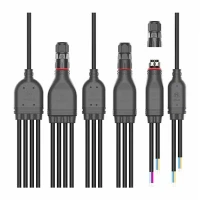
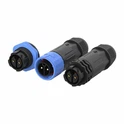
At our company, we offer a range of molding connectors, including the M15 T Type Waterproof Connector, Y Type Waterproof Connector, and M15 F Type Waterproof Connector. These connectors are designed with impedance matching in mind and are suitable for a variety of applications, including industrial automation, automotive, and telecommunications.
The M15 T Type Waterproof Connector, for example, is designed with a precise geometry and high-quality dielectric material to ensure good impedance matching. It also has a waterproof design, which makes it suitable for use in harsh environments. The Y Type Waterproof Connector is another great option, with its unique Y-shaped design that allows for easy connection and disconnection. And the M15 F Type Waterproof Connector is known for its high reliability and excellent electrical performance.
Conclusion
Achieving good impedance matching in a molding connector is essential for the performance of your electronic systems. By understanding the factors that affect impedance, optimizing the design, ensuring quality manufacturing, and conducting thorough testing and validation, you can achieve the desired impedance matching. At our company, we're committed to providing high-quality molding connectors that are designed with impedance matching in mind. If you're interested in learning more about our products or have any questions about impedance matching, please don't hesitate to contact us. We'd be happy to help you find the right connector for your application and assist you in achieving good impedance matching.
References
- Smith, R. L. (2016). Modern Communication Circuits. Cambridge University Press.
- Pozar, D. M. (2011). Microwave Engineering. Wiley.