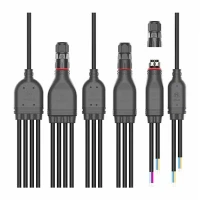
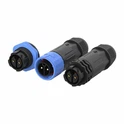
Proper grounding of Bulk F type connectors is crucial for the safety and performance of electrical systems. As a supplier of Bulk F type connectors, I understand the importance of ensuring that these connectors are grounded correctly. In this blog post, I will share some key steps and considerations to help you achieve proper grounding for Bulk F type connectors.
Understanding the Basics of Grounding
Before delving into the specifics of grounding Bulk F type connectors, it's essential to have a basic understanding of grounding itself. Grounding is the process of connecting an electrical circuit or device to the earth or a conductive body that serves as a reference point for electrical potential. The primary purposes of grounding include:
- Safety: Grounding helps protect people and equipment from electrical shock by providing a low - resistance path for fault currents to flow into the ground.
- Electromagnetic Compatibility (EMC): It reduces electromagnetic interference (EMI) and radio - frequency interference (RFI) by providing a stable reference potential and a path for unwanted electrical noise to dissipate.
- Stability: Grounding helps maintain the stability of electrical systems by ensuring that electrical potentials are consistent and predictable.
Selecting the Right Grounding Method
There are several methods for grounding Bulk F type connectors, and the choice depends on the specific application and requirements. Here are some common grounding methods:
Direct Grounding
Direct grounding involves connecting the outer conductor of the Bulk F type connector directly to a grounding point. This is the simplest and most straightforward method. For example, in a coaxial cable system, the outer conductor of the cable, which is connected to the Bulk F type connector, can be connected to a metal chassis or a dedicated grounding bar. The key is to ensure a low - resistance connection between the connector and the ground.
Indirect Grounding
Indirect grounding uses a grounding conductor, such as a wire or a grounding strap, to connect the Bulk F type connector to the ground. This method is often used when direct connection is not feasible or when additional flexibility is required. For instance, if the connector is located in a hard - to - reach area, a grounding wire can be used to connect it to a more accessible grounding point.
Preparing the Grounding Path
Once you have selected the grounding method, the next step is to prepare the grounding path. Here are some important steps to follow:
Cleaning the Grounding Surface
The surface where the grounding connection will be made must be clean and free of dirt, rust, and paint. Dirt and rust can increase the resistance of the grounding path, which can compromise the effectiveness of the grounding. You can use a wire brush or a sandpaper to clean the surface until it is shiny and free of contaminants.
Ensuring a Low - Resistance Connection
A low - resistance connection is essential for proper grounding. To achieve this, you can use a suitable grounding material, such as copper or aluminum. These materials have low electrical resistance and are excellent conductors of electricity. Additionally, you can use a conductive paste or a grounding compound to improve the contact between the grounding surface and the connector or the grounding conductor.
Securing the Grounding Connection
The grounding connection must be secure to prevent it from coming loose over time. You can use screws, nuts, and bolts to fasten the grounding conductor to the grounding surface. Make sure that the connection is tight and that there is no movement or vibration that could cause the connection to break.
Testing the Grounding System
After the grounding connection is made, it is important to test the grounding system to ensure that it is working properly. Here are some common testing methods:
Continuity Testing
Continuity testing is used to check if there is a continuous electrical path between the Bulk F type connector and the ground. You can use a multimeter set to the continuity mode to perform this test. Simply touch one probe of the multimeter to the outer conductor of the connector and the other probe to the grounding point. If the multimeter beeps or shows a low resistance reading, it means that there is a continuous path and the grounding is likely to be working.
Resistance Testing
Resistance testing measures the resistance of the grounding path. A low resistance value indicates a good grounding connection. You can use a multimeter set to the resistance mode to measure the resistance between the connector and the ground. The resistance should be as low as possible, typically less than a few ohms.
Considerations for Different Applications
The grounding requirements for Bulk F type connectors can vary depending on the application. Here are some considerations for different types of applications:
Indoor Applications
In indoor applications, such as home entertainment systems or office networks, the grounding requirements are generally less stringent. However, it is still important to ensure proper grounding to prevent electrical noise and interference. You can use a simple direct grounding method, such as connecting the connector to a metal chassis or a grounding bar in the equipment.


Outdoor Applications
Outdoor applications, such as satellite communication systems or outdoor surveillance cameras, require more robust grounding. The connectors are exposed to environmental factors, such as moisture, lightning, and temperature variations, which can affect the grounding performance. In addition to direct or indirect grounding, it may be necessary to use surge protectors and lightning arresters to protect the system from electrical surges.
High - Frequency Applications
In high - frequency applications, such as radio frequency (RF) systems, grounding is critical for maintaining signal integrity. The grounding path must have low inductance and capacitance to minimize signal loss and interference. Special grounding techniques, such as using a ground plane or a multiple - point grounding system, may be required to meet the high - frequency requirements.
Related Products for Enhanced Grounding
In addition to proper grounding methods, using high - quality connectors can also contribute to better grounding performance. We also offer a range of waterproof connectors, such as the M18 Straight Type Waterproof Connector, M16 Straight Type Waterproof Connector, and M20 Straight Type Waterproof Connector. These connectors are designed to provide reliable connections in harsh environments and can be used in conjunction with proper grounding techniques to ensure the safety and performance of electrical systems.
Maintenance and Inspection
Proper grounding is not a one - time task. Regular maintenance and inspection are necessary to ensure that the grounding system remains effective over time. Here are some maintenance and inspection tips:
Visual Inspection
Regularly inspect the grounding connections for signs of damage, such as corrosion, loose wires, or broken connections. If any damage is found, it should be repaired or replaced immediately.
Resistance Testing
Periodically perform resistance testing on the grounding system to ensure that the resistance remains low. An increase in resistance may indicate a problem with the grounding connection, such as corrosion or a loose connection.
Conclusion
Ensuring proper grounding of Bulk F type connectors is essential for the safety, performance, and stability of electrical systems. By understanding the basics of grounding, selecting the right grounding method, preparing the grounding path, testing the grounding system, and considering the specific requirements of different applications, you can achieve reliable grounding. If you have any questions or need further assistance with grounding Bulk F type connectors or other related products, feel free to contact us for more information and to discuss your procurement needs.
References
- Electrical Installation Handbook, Schneider Electric
- Grounding and Bonding for Electrical Systems, IEEE Standards Association
- Coaxial Cable Systems Design and Installation Guide, ARRL