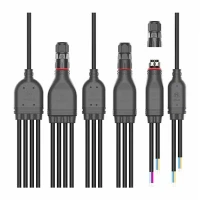
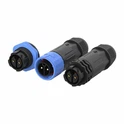
As a seasoned molding connector supplier, I understand the critical importance of ensuring our products meet the highest performance standards. Testing the performance of a molding connector is a multi - faceted process that involves various aspects, from electrical properties to mechanical durability. In this blog, I'll share with you how we conduct comprehensive performance testing on our molding connectors.
Electrical Performance Testing
The electrical performance of a molding connector is fundamental to its functionality. After all, the primary purpose of most connectors is to transmit electricity or signals reliably.
Contact Resistance Testing
Contact resistance is a crucial parameter as it directly affects the power loss and signal integrity in a circuit. To measure the contact resistance of our molding connectors, we use a micro - ohmmeter. We apply a known current across the contacts of the connector and then measure the voltage drop. According to Ohm's law (R = V/I), we can calculate the contact resistance accurately. For instance, when testing our M16 Straight Type Waterproof Connector, we typically aim for a low and stable contact resistance value. A high contact resistance can lead to overheating and signal degradation, which are unacceptable in most applications.
Insulation Resistance Testing
Insulation resistance testing is carried out to ensure that the insulating materials within the connector can effectively prevent electrical leakage. We use an insulation resistance tester, also known as a megohmmeter. This device applies a high - voltage DC signal between the conductive parts and the insulation. For example, in our A25 5pin Waterproof Connector, a high - quality insulation material is used, and through insulation resistance testing, we ensure that the resistance value meets or exceeds the industry standards. A low insulation resistance can pose significant safety risks, such as electrical shock and short - circuits.
Dielectric Withstanding Voltage Testing
Dielectric withstanding voltage testing is used to evaluate the ability of the connector's insulation to withstand high voltages without breaking down. We place the connector in a test fixture and apply a gradually increasing AC or DC voltage for a specified period. For our A20 7pin Waterproof Connector, we test it at a voltage level higher than its normal operating voltage to simulate extreme conditions. The connector should not experience electrical breakdown during the test. Electrical breakdown can lead to permanent damage to the connector and the entire electrical system.
Mechanical Performance Testing
Mechanical performance is also a key factor as molding connectors often need to withstand various mechanical stresses during installation and use.
Insertion and Extraction Force Testing
Insertion and extraction force testing is essential to ensure that the connector can be easily mated and unmated without causing damage. We use a force - measuring device to measure the force required to insert and extract the connector. For example, for our standard - size connectors, we set appropriate force ranges. Too high a force can make the connector difficult to use, while too low a force may lead to poor contact or accidental disconnection.
Durability Testing
Durability testing involves repeatedly mating and unmating the connector to simulate its long - term use. We use an automated testing machine to perform a large number of mating and unmating cycles. For instance, we may subject our connectors to 500 to 1000 mating and unmating cycles. During this process, we monitor the contact resistance and other electrical parameters to detect any degradation in performance. If a connector fails to maintain its electrical performance after a certain number of cycles, it indicates a problem with its mechanical design or material.
Vibration and Shock Testing
Molding connectors may be exposed to vibration and shock in many applications, such as in automotive or industrial equipment. We conduct vibration and shock testing to ensure that the connector can maintain its electrical and mechanical integrity under these conditions. We use specialized vibration and shock test equipment to simulate the real - world vibration and shock environments. For example, for connectors used in automotive applications, we perform tests according to automotive industry standards. If a connector fails to function properly during vibration or shock testing, it is likely to cause intermittent electrical connections, which can lead to system malfunctions.
Environmental Performance Testing
Since molding connectors are often used in various environments, their performance under different environmental conditions must be evaluated.
Temperature and Humidity Testing
We conduct temperature and humidity testing to assess the connector's performance in different temperature and humidity conditions. We place the connector in a climate chamber and expose it to a range of temperatures and humidity levels. For example, we may test the connector at temperatures from - 40°C to 85°C and relative humidity levels from 10% to 98%. During the test, we monitor the electrical performance of the connector. High humidity can cause corrosion of the contacts, and extreme temperatures can affect the mechanical properties of the connector materials.
Waterproof and Dustproof Testing
For waterproof and dustproof connectors like our M16 Straight Type Waterproof Connector, A25 5pin Waterproof Connector and A20 7pin Waterproof Connector, we perform waterproof and dustproof testing. We use methods such as the IP (Ingress Protection) rating system. For example, to test for dustproofing, we place the connector in a dust chamber filled with a specific type of dust and then check if any dust has entered the connector. For waterproofing, we use water - spraying or immersion tests according to the required IP rating. A high - quality waterproof and dustproof connector should be able to maintain its performance even in harsh outdoor or industrial environments.
Chemical Resistance Testing
In some industrial applications, molding connectors may come into contact with various chemicals. We conduct chemical resistance testing by exposing the connector to different chemicals, such as solvents, oils, and acids, for a certain period. After the exposure, we check for any signs of damage or degradation in the connector's electrical and mechanical properties. For example, if a connector is designed for use in a chemical - processing plant, it must be able to withstand the chemicals present in that environment.
Conclusion and Invitation
In conclusion, testing the performance of a molding connector is a comprehensive and rigorous process that involves multiple aspects of electrical, mechanical, environmental, and chemical performance. As a molding connector supplier, we are committed to ensuring that our products meet the highest quality and performance standards through these comprehensive testing methods.


If you are in the market for high - quality molding connectors and want to learn more about our products or discuss your specific requirements, we welcome you to contact us for procurement and negotiation. We are confident that our products can meet your needs and provide you with reliable solutions.
References
- Grob, Bernard. "Basic Electronics". McGraw - Hill Education, 2017.
- ANSI/TIA - 568.3 - D, "Commercial Building Telecommunications Cabling Standard". Telecommunications Industry Association, 2019.
- IEC 60529, "Degrees of protection provided by enclosures (IP Code)". International Electrotechnical Commission, 2019.