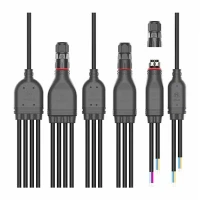
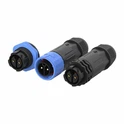
Parallel connectors play a crucial role in various electrical and electronic systems, enabling the efficient transfer of power and signals. As a leading supplier of parallel connectors, we understand the significance of their electrical characteristics in ensuring optimal performance and reliability. In this blog post, we will explore the key electrical characteristics of parallel connectors and their implications for different applications.
Resistance
Resistance is one of the most fundamental electrical characteristics of a parallel connector. It represents the opposition to the flow of electric current through the connector. Low resistance is desirable in parallel connectors as it minimizes power loss and heat generation. High resistance can lead to significant energy dissipation, which not only reduces the efficiency of the system but also increases the risk of overheating and component failure.
The resistance of a parallel connector is influenced by several factors, including the material of the conductors, the cross - sectional area of the contacts, and the quality of the connection. For example, connectors made from high - conductivity materials such as copper or silver have lower resistance compared to those made from less conductive materials. Additionally, larger cross - sectional areas of the contacts also result in lower resistance.
At our company, we use high - quality conductive materials and advanced manufacturing processes to ensure that our parallel connectors have low and stable resistance. This helps to enhance the overall performance and reliability of the systems in which our connectors are used.
Voltage Rating
The voltage rating of a parallel connector indicates the maximum voltage that the connector can safely handle without experiencing breakdown or arcing. It is an important characteristic, especially in applications where high voltages are involved. Exceeding the voltage rating of a connector can lead to electrical breakdown, which can cause short circuits, damage to the connector and other components, and even pose a safety hazard.
Our parallel connectors are designed with appropriate voltage ratings to meet the requirements of different applications. We consider factors such as the insulation material, the distance between the contacts, and the overall design of the connector to ensure a sufficient voltage - withstand capability. Whether it is a low - voltage application in consumer electronics or a high - voltage application in industrial power systems, we have the right parallel connectors to offer.
Current Rating
The current rating of a parallel connector is the maximum amount of current that the connector can carry continuously without significant overheating. Similar to the voltage rating, exceeding the current rating can lead to overheating, which may damage the connector and affect the performance of the entire system.
The current - carrying capacity of a parallel connector is determined by factors such as the cross - sectional area of the conductors, the material of the conductors, and the heat dissipation capability of the connector. Our connectors are engineered to have high current ratings by using thick conductors and efficient heat - dissipation designs. This allows them to operate reliably in high - current applications, such as power distribution systems and electric vehicle charging stations.


Capacitance
Capacitance is another important electrical characteristic of parallel connectors. It represents the ability of the connector to store electrical energy in an electric field. In high - speed signal applications, capacitance can have a significant impact on signal integrity. Excessive capacitance can cause signal distortion, attenuation, and crosstalk, which can degrade the quality of the transmitted signals.
We carefully design our parallel connectors to minimize capacitance. This involves optimizing the geometry of the contacts, the spacing between the conductors, and the use of low - dielectric - constant insulation materials. By reducing capacitance, our connectors can support high - speed data transmission with minimal signal loss and interference.
Inductance
Inductance is the property of a conductor or a circuit to oppose changes in the current flowing through it. In parallel connectors, inductance can cause problems in high - frequency applications. It can lead to voltage spikes and ringing in the signals, which can affect the accuracy and reliability of the data transmission.
To address the issue of inductance, we use special design techniques in our parallel connectors. For example, we may use twisted - pair or coaxial cable configurations to cancel out the magnetic fields and reduce inductance. Our engineers also carefully select the materials and geometries of the connectors to minimize the inductive effects.
Crosstalk
Crosstalk occurs when a signal from one conductor in a parallel connector interferes with the signal in an adjacent conductor. This can happen due to the electromagnetic coupling between the conductors. In high - density parallel connectors, where the conductors are closely spaced, crosstalk can be a significant problem, especially in high - speed data transmission applications.
We take several measures to reduce crosstalk in our parallel connectors. One approach is to increase the spacing between the conductors or use shielding materials to isolate the conductors from each other. We also use advanced signal - routing techniques and impedance - matching designs to minimize the electromagnetic interference between the conductors.
Specific Product Examples
Our product line offers a variety of parallel connectors with excellent electrical characteristics. For example, our M20 T Type Waterproof Connector is designed for outdoor and harsh - environment applications. It has high resistance to water and dust, and its electrical characteristics are carefully optimized to ensure reliable signal and power transmission even in wet and dirty conditions.
The M16 Straight Type Waterproof Connector is another popular choice. It is compact and offers excellent electrical performance, making it suitable for applications where space is limited.
For high - power applications, our M27 Straight Type Waterproof Connector is a great option. It has a high current - carrying capacity and low resistance, which can effectively reduce power loss and heat generation.
Conclusion
In conclusion, understanding the electrical characteristics of parallel connectors is essential for selecting the right connectors for your specific applications. As a professional supplier of parallel connectors, we are committed to providing high - quality products with excellent electrical performance. Our connectors are designed and manufactured to meet the diverse needs of different industries, from consumer electronics to industrial automation and energy.
If you are in need of parallel connectors for your project, we invite you to contact us for procurement discussions. Our team of experts will be happy to assist you in choosing the most suitable connectors based on your requirements.
References
- Grob, Bernard. "Basic Electronics." McGraw - Hill Education, 2007.
- Horowitz, Paul, and Winfield Hill. "The Art of Electronics." Cambridge University Press, 2015.