In the realm of electrical and electronic systems, connectors play a pivotal role in ensuring seamless communication and power transfer. Among the various types of connectors, parallel connectors stand out for their unique characteristics and wide - ranging applications. As a supplier of parallel connectors, I am excited to delve into the details of what a parallel connector is, its functions, advantages, and the different types available in the market.
Understanding Parallel Connectors
A parallel connector is a type of electrical connector designed to transfer multiple signals or data streams simultaneously. Unlike serial connectors, which transfer data one bit at a time in a sequential manner, parallel connectors can transmit several bits of data at once. This parallel transmission significantly increases the data transfer rate, making it ideal for applications where high - speed data communication is crucial.
The basic structure of a parallel connector consists of multiple pins or contacts arranged in parallel rows. Each pin is responsible for carrying a specific signal or data bit. For example, in a simple 8 - bit parallel connector, there will be eight individual pins, each capable of transmitting one bit of data simultaneously. This allows for the transfer of an entire byte of data in a single clock cycle, as opposed to the eight clock cycles required by an 8 - bit serial connector.
Functions of Parallel Connectors
The primary function of parallel connectors is to facilitate high - speed data transfer between different components of an electrical or electronic system. They are commonly used in applications such as computer systems, industrial automation, and telecommunications.
In computer systems, parallel connectors were widely used in the past for connecting peripherals such as printers, scanners, and external hard drives. The parallel port, also known as the Centronics port, was a standard interface for printers, allowing for the rapid transfer of large amounts of data. Although serial interfaces have largely replaced parallel ports in modern computers due to their smaller size and better electromagnetic compatibility, parallel connectors still find use in some specialized applications where high - speed data transfer is essential.
In industrial automation, parallel connectors are used to connect various sensors, actuators, and control devices. These connectors allow for the quick and efficient transfer of data between different parts of the automation system, enabling real - time control and monitoring. For example, in a robotic manufacturing cell, parallel connectors can be used to connect the robot's control unit to its various sensors and actuators, ensuring smooth and precise operation.
Advantages of Parallel Connectors
One of the main advantages of parallel connectors is their high data transfer rate. By transmitting multiple bits of data simultaneously, parallel connectors can achieve much faster transfer speeds compared to serial connectors. This makes them suitable for applications where large amounts of data need to be transferred quickly, such as high - resolution image and video transfer.
Another advantage of parallel connectors is their simplicity. The parallel transmission mechanism is relatively straightforward, making it easier to design and implement. This simplicity also leads to lower costs in some cases, as the components required for parallel data transfer are often less complex than those for serial transfer.
Parallel connectors also offer better fault tolerance in some situations. Since each pin in a parallel connector carries a separate signal, if one pin fails, the other pins can still continue to transmit data. This can help to maintain the functionality of the system even in the presence of minor faults.
Types of Parallel Connectors
There are several types of parallel connectors available in the market, each designed for specific applications. Some of the common types include:
Ribbon Cable Connectors
Ribbon cable connectors are a popular type of parallel connector. They consist of a flat, flexible cable with multiple conductors arranged in parallel rows. Ribbon cable connectors are commonly used in computer systems to connect internal components such as hard drives, CD - ROM drives, and motherboards. These connectors offer a simple and cost - effective way to transfer data between different components.
DIN Connectors
DIN (Deutsches Institut für Normung) connectors are a family of standardized electrical connectors. They come in various sizes and configurations and are used in a wide range of applications, including audio and video equipment, computer peripherals, and industrial control systems. Some DIN connectors are designed for parallel data transfer, offering high - speed communication between different devices.
Waterproof Parallel Connectors
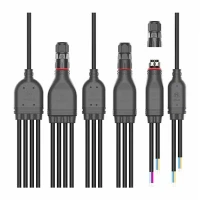
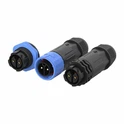
In environments where moisture, dust, or other contaminants are a concern, waterproof parallel connectors are used. These connectors are designed to prevent water and other liquids from entering the connector, ensuring reliable operation even in harsh conditions. As a supplier, we offer a variety of waterproof parallel connectors, such as the M18 Straight Type Waterproof Connector, M16 Straight Type Waterproof Connector, and M20 Straight Type Waterproof Connector. These connectors are widely used in outdoor lighting, marine electronics, and industrial applications where protection against the elements is essential.
Our Product Offerings
As a parallel connector supplier, we understand the diverse needs of our customers. Our product line includes a wide range of parallel connectors, from standard ribbon cable connectors to specialized waterproof and high - speed connectors.
We take pride in the quality of our products. All our connectors are manufactured using high - quality materials and advanced production techniques to ensure reliability and durability. We also adhere to strict quality control standards to guarantee that each connector meets or exceeds industry requirements.


In addition to our standard product offerings, we also provide custom - design services. If you have specific requirements for your parallel connectors, such as a unique pin configuration or special environmental protection, our team of experienced engineers can work with you to develop a custom solution that meets your needs.
Conclusion
Parallel connectors are an essential component in many electrical and electronic systems. Their ability to transfer multiple bits of data simultaneously makes them ideal for applications where high - speed data communication is required. With a wide range of types and configurations available, there is a parallel connector suitable for almost every application.
Whether you are in the computer industry, industrial automation, or any other field that requires high - speed data transfer, our company is your reliable partner for parallel connectors. We are committed to providing high - quality products and excellent customer service. If you are interested in purchasing parallel connectors or have any questions about our product offerings, please feel free to contact us for a procurement discussion. We look forward to meeting your connector needs and contributing to the success of your projects.
References
- Grob, Milton G. "Basic Electronics." McGraw - Hill Education, 2014.
- Boylestad, Robert L., and Nashelsky, Louis. "Electronic Devices and Circuit Theory." Pearson, 2018.