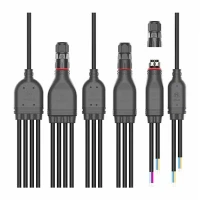
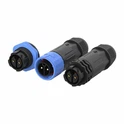
In the realm of electrical and electronic connections, connectors play a pivotal role in ensuring seamless and reliable signal or power transmission. Among the various types of connectors available in the market, bulk cable connectors and regular connectors stand out as two distinct categories, each with its own set of characteristics, applications, and advantages. As a supplier of bulk cable connectors, I am well - versed in the nuances that set these two types of connectors apart. In this blog post, I will delve into the differences between bulk cable connectors and regular connectors to help you make an informed decision when choosing the right connector for your specific needs.


Design and Structure
One of the most apparent differences between bulk cable connectors and regular connectors lies in their design and structure. Regular connectors are typically designed for individual or small - scale applications. They are often pre - assembled and come in standard sizes and configurations. These connectors are usually compact and lightweight, making them suitable for applications where space is limited, such as in consumer electronics like smartphones, laptops, and tablets.
On the other hand, bulk cable connectors are designed to handle larger volumes of cables. They are often modular in design, allowing for easy customization and expansion. Bulk cable connectors can accommodate multiple cables within a single housing, which simplifies the installation process and reduces the overall space required for cable management. For example, in a data center where hundreds or even thousands of cables need to be connected, bulk cable connectors are the preferred choice as they can efficiently organize and connect large numbers of cables.
Application Scope
The application scope of bulk cable connectors and regular connectors also varies significantly. Regular connectors are commonly used in consumer products, automotive electronics, and small - scale industrial applications. In consumer products, they are used to connect various components such as batteries, displays, and sensors. In the automotive industry, regular connectors are used for wiring harnesses in vehicles, connecting everything from the engine control unit to the dashboard instruments.
Bulk cable connectors, however, are mainly used in large - scale industrial, commercial, and telecommunications applications. In industrial settings, they are used to connect heavy - duty machinery, control systems, and automation equipment. In the telecommunications industry, bulk cable connectors are essential for connecting fiber optic cables in network infrastructure, enabling high - speed data transmission over long distances. For instance, in a large - scale telecommunications network, Y Type Waterproof Connector can be used to connect multiple fiber optic cables in a waterproof and reliable manner, ensuring uninterrupted communication.
Installation and Maintenance
Installation and maintenance are other areas where bulk cable connectors and regular connectors differ. Regular connectors are relatively easy to install, especially in consumer products where the installation process is often straightforward and can be done by the end - user. They usually require simple tools such as screwdrivers or pliers for installation. Maintenance of regular connectors is also relatively simple, often involving cleaning the contacts and checking for loose connections.
Bulk cable connectors, on the other hand, require more specialized knowledge and tools for installation. Due to their complex design and the large number of cables they handle, the installation process can be time - consuming and requires careful planning. Professional installers are often needed to ensure that the connectors are installed correctly and that the cables are properly organized. Maintenance of bulk cable connectors also requires more attention. Regular inspections are necessary to check for any signs of wear and tear, and replacement of damaged components may be more complex and costly. For example, the M15 F Type Waterproof Connector used in harsh environments may require more frequent maintenance to ensure its waterproof performance.
Cost Considerations
Cost is an important factor when choosing between bulk cable connectors and regular connectors. Regular connectors are generally more affordable, especially for small - scale applications. Their mass - production and standardization make them cost - effective for consumer products and small - scale industrial projects. The cost of regular connectors is mainly determined by the materials used and the complexity of the design.
Bulk cable connectors, however, can be more expensive. The cost of bulk cable connectors includes not only the cost of the connector itself but also the cost of installation and maintenance. The modular design and the ability to handle multiple cables often result in a higher price tag. However, when considering the long - term benefits such as reduced cable management costs and improved reliability, the investment in bulk cable connectors can be justified, especially for large - scale projects. For example, in a large - scale data center project, the use of T Molding Type Waterproof Connector may increase the initial cost but can save money in the long run by reducing the risk of cable failures and downtime.
Performance and Reliability
In terms of performance and reliability, both bulk cable connectors and regular connectors have their own strengths. Regular connectors are designed to provide reliable connections for small - scale applications. They are often tested to meet specific industry standards for electrical performance, such as impedance matching and signal integrity. However, their performance may be limited in high - power or high - speed applications.
Bulk cable connectors, on the other hand, are designed to handle high - power and high - speed applications. They are built to withstand harsh environmental conditions, such as extreme temperatures, humidity, and vibration. The modular design of bulk cable connectors also allows for easy replacement of damaged components, which improves the overall reliability of the system. For example, in a power generation plant, bulk cable connectors are used to connect high - voltage cables, ensuring safe and reliable power transmission.
Conclusion
In conclusion, the differences between bulk cable connectors and regular connectors are significant in terms of design, application scope, installation and maintenance, cost, and performance. Regular connectors are suitable for small - scale applications where simplicity, affordability, and ease of installation are key factors. Bulk cable connectors, on the other hand, are the preferred choice for large - scale industrial, commercial, and telecommunications applications where high - power, high - speed, and reliable connections are required.
As a supplier of bulk cable connectors, I understand the unique requirements of different industries and applications. We offer a wide range of high - quality bulk cable connectors, including the Y Type Waterproof Connector, M15 F Type Waterproof Connector, and T Molding Type Waterproof Connector, to meet the diverse needs of our customers.
If you are in the market for bulk cable connectors or have any questions about the differences between bulk cable connectors and regular connectors, I encourage you to contact us for more information and to discuss your specific requirements. Our team of experts is ready to assist you in finding the right connector solution for your project.
References
- "Electrical Connector Handbook" by Arnold Holzbock
- "Connectors for Electronic Applications" by Paul D. Franzon
- Industry standards and technical documents related to electrical connectors