In the realm of electrical connections, bulk cable connectors play a pivotal role in ensuring seamless and reliable transmission of power and data. As a seasoned bulk cable connector supplier, I've witnessed firsthand the diverse needs of industries and the importance of choosing the right connector for the job. One of the most common questions I encounter is the difference between single - pole and multi - pole bulk cable connectors. In this blog post, I'll delve into the details of these two types of connectors, highlighting their unique features, applications, and benefits.
Understanding Single - Pole Bulk Cable Connectors
Single - pole bulk cable connectors, as the name suggests, have a single electrical contact point. They are designed to transmit a single electrical signal or power source. These connectors are relatively simple in design, consisting of a single pin or socket that mates with a corresponding connector on the other end of the cable.


Design and Structure
The simplicity of single - pole connectors is one of their key advantages. They typically have a compact form factor, making them ideal for applications where space is limited. The single contact point reduces the complexity of the connection, which in turn simplifies the installation process. This also means that single - pole connectors are generally more cost - effective than their multi - pole counterparts.
Applications
Single - pole connectors are commonly used in applications where only one electrical connection is required. For example, they are widely used in power supplies, where they can be used to connect a power source to a device. They are also used in simple lighting systems, where a single wire is needed to carry the electrical current to the light bulb. Another common application is in battery charging systems, where a single - pole connector can be used to connect the battery to the charger.
Benefits
- Cost - effective: Due to their simple design, single - pole connectors are usually less expensive to manufacture, which translates to lower costs for the end - user.
- Easy to install: The straightforward design makes installation a breeze, even for those with limited technical knowledge.
- Space - saving: Their compact size makes them suitable for applications where space is at a premium.
Exploring Multi - Pole Bulk Cable Connectors
Multi - pole bulk cable connectors, on the other hand, have multiple electrical contact points. These connectors are designed to transmit multiple electrical signals or power sources simultaneously. They come in a variety of configurations, with the number of poles ranging from two to dozens.
Design and Structure
Multi - pole connectors are more complex in design than single - pole connectors. They consist of multiple pins or sockets arranged in a specific pattern. The pins are usually housed in a connector body, which provides mechanical support and protection for the contacts. The connector body also helps to ensure proper alignment of the pins during mating, which is crucial for a reliable connection.
Applications
Multi - pole connectors are used in a wide range of applications where multiple electrical connections are required. In industrial automation, for example, they are used to connect sensors, actuators, and other devices to a control system. In automotive applications, multi - pole connectors are used to connect various electrical components in the vehicle, such as the engine control unit, dashboard instruments, and lighting systems. They are also commonly used in telecommunications, where they can be used to connect multiple wires in a network.
Benefits
- High - density connections: Multi - pole connectors allow for multiple electrical connections to be made in a single connector, which can significantly reduce the space required for wiring.
- Simplified wiring: By combining multiple connections into one connector, the overall wiring complexity is reduced, making the installation and maintenance process easier.
- Improved reliability: The proper alignment and mechanical support provided by the connector body help to ensure a more reliable connection, which is especially important in critical applications.
Key Differences between Single - Pole and Multi - Pole Connectors
Electrical Capacity
Single - pole connectors are typically used for low - power applications, as they can only carry a single electrical signal or power source. Multi - pole connectors, on the other hand, can handle higher power loads and multiple signals simultaneously, making them suitable for more demanding applications.
Physical Size
Single - pole connectors are generally smaller and more compact than multi - pole connectors. This makes them a better choice for applications where space is limited. Multi - pole connectors, however, are larger due to the presence of multiple contacts, but they offer the advantage of high - density connections.
Cost
Single - pole connectors are usually less expensive than multi - pole connectors. This is because they are simpler in design and require fewer materials to manufacture. However, the cost of a connector also depends on other factors such as the quality of materials, the manufacturing process, and the quantity ordered.
Installation Complexity
Single - pole connectors are easier to install than multi - pole connectors. The single contact point makes it straightforward to align and connect the connector. Multi - pole connectors, on the other hand, require more careful alignment of the multiple contacts, which can be more challenging, especially in high - density applications.
Choosing the Right Connector for Your Application
When choosing between a single - pole and a multi - pole bulk cable connector, several factors need to be considered.
Application Requirements
The first step is to determine the specific requirements of your application. If you only need to make a single electrical connection, a single - pole connector is likely the best choice. However, if you need to make multiple connections, a multi - pole connector will be more suitable.
Space Constraints
If space is limited, a single - pole connector may be the better option due to its compact size. However, if you can afford the extra space, a multi - pole connector can offer the benefits of high - density connections and simplified wiring.
Budget
Cost is always an important consideration. If you are working with a tight budget, a single - pole connector may be more cost - effective. However, if the application requires a high - density connection or multiple signals, the additional cost of a multi - pole connector may be justified.
Our Product Offerings
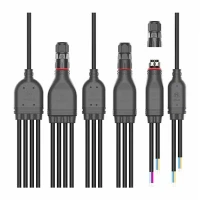
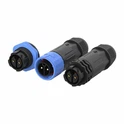
As a bulk cable connector supplier, we offer a wide range of single - pole and multi - pole connectors to meet the diverse needs of our customers. Some of our popular products include the M15 F Type Waterproof Connector, T Molding Type Waterproof Connector, and M15 T Type Waterproof Connector. These connectors are designed to provide reliable and waterproof connections, making them suitable for use in harsh environments.
Conclusion
In conclusion, the choice between a single - pole and a multi - pole bulk cable connector depends on the specific requirements of your application. Single - pole connectors are simple, cost - effective, and suitable for applications where only one electrical connection is needed. Multi - pole connectors, on the other hand, offer high - density connections, simplified wiring, and are ideal for applications where multiple electrical connections are required.
If you are in the market for bulk cable connectors and need assistance in choosing the right product for your application, please don't hesitate to contact us. Our team of experts is ready to help you find the best solution for your needs. We look forward to discussing your requirements and working with you on your next project.
References
- Grob, Bernard. "Basic Electronics." McGraw - Hill Education, 2007.
- Terman, Frederick Emmons. "Electronic and Radio Engineering." McGraw - Hill, 1955.
- Neaman, Donald A. "Microelectronics: Circuit Analysis and Design." McGraw - Hill, 2010.