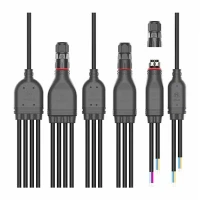
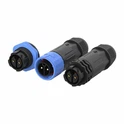
Waterproof connectors are essential components in various industries, ensuring reliable electrical connections in wet, harsh, or challenging environments. As a seasoned waterproof connector supplier, I've had the privilege of witnessing the diverse applications and the unique characteristics of both male and female waterproof connectors. In this blog post, I'll delve into the differences between male and female waterproof connectors, shedding light on their design, functionality, and practical implications.
Design and Physical Features
One of the most apparent differences between male and female waterproof connectors lies in their design and physical features. Male connectors typically have protruding pins or terminals, which are designed to fit into corresponding sockets or receptacles in female connectors. These pins are often made of conductive materials such as copper or brass, and they are carefully engineered to provide a secure and stable electrical connection.
On the other hand, female connectors feature sockets or receptacles that are designed to receive the pins of male connectors. These sockets are usually lined with conductive materials to ensure good electrical contact with the pins. The design of female connectors also includes features such as locking mechanisms or seals to prevent moisture, dust, and other contaminants from entering the connection and causing damage.
The shape and size of male and female waterproof connectors can also vary depending on their intended application. For example, some connectors are designed to be compact and lightweight, making them suitable for use in portable devices or applications where space is limited. Other connectors may be larger and more robust, designed to withstand high levels of vibration, shock, and environmental stress.
Electrical Performance
In addition to their physical differences, male and female waterproof connectors also exhibit different electrical performance characteristics. The electrical performance of a connector is determined by several factors, including its contact resistance, insulation resistance, and dielectric strength.
Contact resistance refers to the resistance encountered by an electrical current as it flows through the connection between the male and female connectors. A low contact resistance is desirable, as it minimizes power loss and ensures efficient electrical transfer. Male connectors typically have lower contact resistance than female connectors, as the pins provide a direct and solid connection with the sockets.
Insulation resistance, on the other hand, refers to the resistance of the insulating material between the conductive parts of the connector. A high insulation resistance is essential to prevent electrical leakage and ensure the safety and reliability of the connection. Female connectors often have higher insulation resistance than male connectors, as the sockets are surrounded by insulating material.
Dielectric strength is another important electrical performance characteristic of waterproof connectors. It refers to the ability of the insulating material to withstand high voltages without breaking down. Both male and female connectors must have sufficient dielectric strength to ensure safe and reliable operation in high-voltage applications.
Environmental Resistance
As their name suggests, waterproof connectors are designed to provide reliable electrical connections in wet or harsh environments. However, male and female connectors may have different levels of environmental resistance depending on their design and construction.
Male connectors are typically more exposed to the environment than female connectors, as the pins protrude from the connector body. This makes them more susceptible to damage from moisture, dust, and other contaminants. To protect the pins from environmental damage, male connectors often feature additional sealing or protective features, such as rubber boots or gaskets.
Female connectors, on the other hand, are generally more protected from the environment, as the sockets are recessed within the connector body. This makes them less susceptible to damage from moisture, dust, and other contaminants. However, female connectors still require proper sealing and protection to ensure reliable operation in harsh environments.
Application Considerations
When selecting male and female waterproof connectors for a specific application, it's important to consider several factors, including the electrical requirements, environmental conditions, and mechanical constraints of the application.
For applications where high electrical performance is required, such as in power transmission or high-speed data transfer, male connectors may be preferred due to their lower contact resistance and better electrical conductivity. However, in applications where environmental resistance is the primary concern, such as in outdoor or marine environments, female connectors may be a better choice due to their more protected design.
It's also important to consider the mechanical constraints of the application, such as the available space, the required mating force, and the ease of installation and maintenance. Some connectors may be designed to be easily mated and unmated, while others may require special tools or techniques for installation.
Examples of Waterproof Connectors in Different Types
In the market, there are various types of waterproof connectors available to meet different application needs. For instance, the T Molding Type Waterproof Connector is a popular choice for many industrial applications. It features a unique T-shaped design that provides a secure and reliable connection, even in harsh environments. The T molding type connector is available in both male and female versions, allowing for easy mating and unmating.


Another example is the M15 T Type Waterproof Connector. This connector is commonly used in automation and control systems, where it provides a reliable electrical connection in wet or dusty environments. The M15 T type connector is designed to be compact and lightweight, making it suitable for use in applications where space is limited.
The M15 F Type Waterproof Connector is also a widely used connector in the industry. It is similar to the M15 T type connector but features a different design and configuration. The M15 F type connector is often used in applications where a high level of environmental resistance is required, such as in outdoor lighting or marine equipment.
Conclusion
In conclusion, male and female waterproof connectors have several differences in terms of their design, electrical performance, environmental resistance, and application considerations. Understanding these differences is essential for selecting the right connector for a specific application and ensuring reliable and efficient electrical connections in wet or harsh environments.
As a waterproof connector supplier, I'm committed to providing high-quality connectors that meet the diverse needs of our customers. Whether you're looking for a compact and lightweight connector for a portable device or a robust and reliable connector for an industrial application, we have the expertise and experience to help you find the right solution.
If you're interested in learning more about our waterproof connectors or have any questions about your specific application, please don't hesitate to contact us. Our team of experts is always available to provide you with personalized advice and support. We look forward to working with you to meet your waterproof connector needs.
References
- Grob, Bernard. "Grob's Basic Electronics." McGraw-Hill Education, 2017.
- Johnson, David E. "Electrical Connectors Handbook." McGraw-Hill Education, 2012.
- National Electrical Manufacturers Association (NEMA). "Standards for Electrical Equipment." NEMA, 2020.