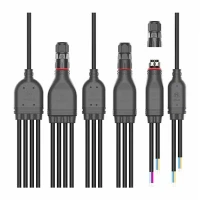
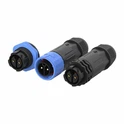
Hey there! As a supplier of street lights connectors, I often get asked about the grounding requirements for these connectors. It's a crucial topic because proper grounding ensures the safety and reliability of street lighting systems. So, let's dive into what the grounding requirements for a street lights connector are all about.
Why Grounding Matters
First off, why do we even need grounding for street lights connectors? Well, grounding serves several important purposes. It helps protect against electrical shocks by providing a path for electrical current to flow safely into the ground in case of a fault. This is super important for the safety of maintenance workers and the general public.
Imagine a situation where there's a short - circuit in a street light. Without proper grounding, the electrical current could find its way into the metal parts of the light fixture or the connector, making it extremely dangerous for anyone who touches it. Grounding acts as a safeguard, redirecting the current away from people and equipment.
Grounding Requirements for Street Lights Connectors
Electrical Code Compliance
In most regions, there are strict electrical codes that govern the grounding of street lighting systems. These codes are designed to ensure the safety of the electrical installation. For example, the National Electrical Code (NEC) in the United States has specific requirements for grounding electrical equipment, including street lights connectors.
The NEC typically requires that all metal parts of the street light fixture and the connector be grounded. This means that there should be a continuous path from the connector to the ground. The grounding conductor should be of an appropriate size to handle the fault current. Usually, a copper conductor is used because of its excellent conductivity.
Connector Design and Grounding
The design of the street lights connector also plays a role in grounding. A good quality connector should have provisions for grounding. Some connectors come with a dedicated grounding pin or terminal. This allows for a direct connection to the grounding conductor.
For instance, our M27 Straight Type Waterproof Connector is designed with grounding in mind. It has a well - defined grounding path that ensures a reliable connection to the ground. This helps in maintaining the integrity of the grounding system and reduces the risk of electrical hazards.
Installation Considerations
Proper installation is key to meeting the grounding requirements. When installing a street lights connector, it's important to make sure that the grounding conductor is securely connected to the connector. The connection should be tight and free from corrosion.
During installation, the grounding conductor should be routed in a way that it is protected from damage. It should not be pinched or crushed, as this could affect its conductivity. Also, the grounding conductor should be connected to a proper grounding electrode, such as a ground rod.
Different Types of Street Lights Connectors and Grounding
M16 Straight Type Waterproof Connector
Our M16 Straight Type Waterproof Connector is another popular choice for street lighting systems. It has a compact design and is suitable for applications where space is limited.
When it comes to grounding, this connector has a built - in grounding mechanism. The grounding pin is designed to provide a reliable connection to the grounding conductor. This ensures that in case of a fault, the electrical current can flow safely to the ground.
RJ45 Waterproof Connector
The RJ45 Waterproof Connector is often used in street lighting systems that require data transmission, such as smart street lights. In addition to its data - transmission capabilities, it also needs to be properly grounded.
The grounding of an RJ45 waterproof connector is similar to other connectors. It should be connected to the grounding conductor to protect against electrical surges and faults. The connector's housing should also be made of a conductive material or have a grounding path to ensure proper grounding.
Testing and Maintenance
Once the street lights connector is installed, it's important to test the grounding system regularly. A simple ground resistance test can be performed to ensure that the grounding is effective. If the ground resistance is too high, it could indicate a problem with the grounding connection.
Maintenance of the grounding system is also crucial. Over time, the grounding conductor may corrode or become loose. Regular inspections should be carried out to check for any signs of damage or deterioration. If any issues are found, they should be addressed immediately to maintain the safety of the street lighting system.
Conclusion
In conclusion, the grounding requirements for a street lights connector are essential for the safety and reliability of street lighting systems. By following the electrical codes, using well - designed connectors, and ensuring proper installation and maintenance, we can minimize the risk of electrical hazards.
If you're in the market for high - quality street lights connectors that meet all the grounding requirements, we're here to help. Our range of connectors, including the M27 Straight Type Waterproof Connector, M16 Straight Type Waterproof Connector, and RJ45 Waterproof Connector, are designed to provide reliable grounding and excellent performance.
If you have any questions or are interested in purchasing our street lights connectors, feel free to reach out. We're always happy to have a chat and discuss how our products can meet your needs.


References
- National Electrical Code (NEC)
- Industry standards for street lighting systems