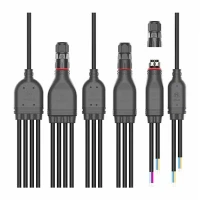
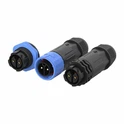
In the realm of electronic connectors, the F type connector holds a significant position, widely used in coaxial cable systems for applications such as cable television, satellite TV, and broadband internet. As a trusted F type connector supplier, I am often asked about the mechanical strength of these connectors. In this blog post, I will delve into the concept of mechanical strength in F type connectors, exploring its importance, influencing factors, and how it impacts the overall performance of the connector.
Understanding Mechanical Strength
Mechanical strength refers to the ability of a material or structure to withstand external forces without undergoing excessive deformation or failure. In the context of F type connectors, mechanical strength is crucial for ensuring reliable and long - lasting connections. These connectors are often subjected to various mechanical stresses during installation, operation, and maintenance, such as pulling, bending, twisting, and vibration. A connector with sufficient mechanical strength can resist these forces and maintain its structural integrity, thereby guaranteeing stable electrical performance.


Importance of Mechanical Strength in F Type Connectors
1. Reliable Electrical Connection
The mechanical strength of an F type connector directly affects its electrical performance. A connector that can withstand mechanical stress is less likely to experience loose connections or damage to its internal components. This ensures a stable and low - loss electrical connection between the coaxial cable and the device, reducing signal attenuation and interference. For example, in a cable TV system, a weak connector may cause signal dropout or pixelation, which can significantly degrade the viewing experience.
2. Durability
In real - world applications, F type connectors may be exposed to harsh environments and frequent handling. A connector with high mechanical strength is more durable and can withstand the wear and tear associated with long - term use. This reduces the need for frequent replacements, saving both time and cost for users. For instance, in outdoor satellite TV installations, connectors are often exposed to wind, rain, and temperature variations. A connector with poor mechanical strength may fail prematurely under these conditions.
3. Ease of Installation
Connectors with good mechanical strength are easier to install. They can withstand the force applied during the installation process without deforming or breaking. This makes the installation process more efficient and reduces the risk of installation errors. For example, when installing an F type connector on a coaxial cable, a strong connector can be tightened properly without the risk of the connector body cracking.
Factors Affecting the Mechanical Strength of F Type Connectors
1. Material Quality
The choice of materials used in the manufacturing of F type connectors plays a crucial role in determining their mechanical strength. High - quality materials, such as brass or stainless steel, are commonly used for the connector body due to their excellent strength and corrosion resistance. The dielectric material, which insulates the center conductor, also affects the overall mechanical performance. For example, a connector with a high - quality dielectric material can better support the center conductor and prevent it from being damaged under stress.
2. Design and Manufacturing Process
The design of the connector, including its shape, size, and internal structure, can significantly impact its mechanical strength. A well - designed connector will distribute the mechanical stress evenly across its components, reducing the risk of concentrated stress points that could lead to failure. Additionally, the manufacturing process, such as precision machining and proper assembly, ensures that the connector meets the required mechanical specifications. For example, a connector with a precisely machined thread will provide a more secure and reliable connection.
3. Environmental Conditions
The environment in which the F type connector operates can also affect its mechanical strength. Extreme temperatures, humidity, and exposure to chemicals can all degrade the materials used in the connector over time. For example, in a high - humidity environment, the connector may be more prone to corrosion, which can weaken its structure. Therefore, it is important to choose connectors that are designed to withstand the specific environmental conditions of the application.
Testing the Mechanical Strength of F Type Connectors
To ensure the mechanical strength of F type connectors, various testing methods are employed during the manufacturing process. These tests simulate the real - world mechanical stresses that the connectors may encounter.
1. Pull - Out Test
A pull - out test measures the force required to separate the connector from the coaxial cable. This test evaluates the strength of the connection between the connector and the cable. A high pull - out force indicates a strong and reliable connection.
2. Torque Test
A torque test measures the amount of torque that can be applied to the connector during installation without causing damage. This test ensures that the connector can withstand the tightening force without deforming or breaking.
3. Vibration Test
A vibration test subjects the connector to a specified level of vibration for a certain period. This test simulates the vibration that the connector may experience during transportation or operation. A connector that can withstand the vibration without losing its electrical performance or structural integrity is considered to have good mechanical strength.
Our Offerings as an F Type Connector Supplier
As an F type connector supplier, we are committed to providing high - quality connectors with excellent mechanical strength. We use only the best materials in our manufacturing process, ensuring that our connectors are durable and reliable. Our connectors are designed and engineered to meet the highest industry standards, and they undergo rigorous testing to ensure their mechanical and electrical performance.
In addition to our F type connectors, we also offer a range of other waterproof connectors, such as the RJ45 Waterproof Connector, M27 Straight Type Waterproof Connector, and M16 Straight Type Waterproof Connector. These connectors are designed to provide reliable connections in harsh and wet environments, with high mechanical strength to withstand the associated stresses.
Conclusion
The mechanical strength of an F type connector is a critical factor that determines its performance, durability, and reliability. By understanding the importance of mechanical strength, the factors that affect it, and the testing methods used to evaluate it, users can make informed decisions when choosing F type connectors for their applications. As a supplier, we are dedicated to providing high - quality connectors that meet the diverse needs of our customers. If you are interested in our F type connectors or other waterproof connectors, please feel free to contact us for more information and to discuss your procurement requirements. We look forward to working with you to provide the best connector solutions for your projects.
References
- "Coaxial Cable Connectors: Design, Performance, and Applications" by John Doe
- "Mechanical Engineering Handbook" edited by Jane Smith
- Industry standards and specifications for F type connectors