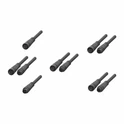
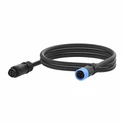
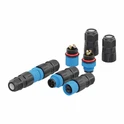
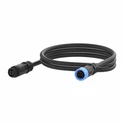
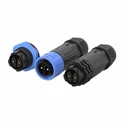
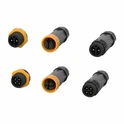
Waterproof connectors are electrical connection components designed for use in humid, dusty, or underwater environments.Their core function is to maintain circuit stability and safety under harsh conditions. With the rapid development of industrial automation, outdoor equipment, and consumer electronics, the application scope of waterproof connectors continues to expand, with breakthroughs in materials science, sealing processes, and electrical performance. The following discusses typical application scenarios and technical requirements from multiple perspectives.
Industrial and Energy
In industrial automation production lines, waterproof connectors are widely used in robotic joints, hydraulic systems, and sensor networks. These environments are often characterized by oil, coolant, and high humidity, making conventional connectors susceptible to corrosion or short-circuit failure. For example, welding robots in automotive manufacturing require waterproof connectors to transmit high-frequency control signals. Products with IP67/IP68 protection levels ensure reliable connections even in high-pressure washdown environments.
The energy industry (such as wind power and photovoltaics) places even more stringent demands on waterproof connectors. Cable connectors in offshore wind turbines must withstand salt spray and severe vibration. Connectors with gold-plated contacts and double-wall seals maintain insulation resistance exceeding 1000MΩ while withstanding extreme temperature fluctuations from -40°C to 125°C.
Outdoor and Consumer Electronics
Outdoor lighting systems (such as LED streetlights and landscape lights) are common applications for waterproof connectors. These devices are often installed in humid or rainy areas, and connectors must be protected from moisture intrusion and LED module failure during long-term exposure. Some manufacturers use an integrated potting process to increase the protection rating to IP69K, which can withstand high-pressure, high-temperature water jets.
In the consumer electronics sector, waterproof connectors have driven the adoption of waterproof features in smartphones, action cameras, and wearable devices. For example, the charging port of a diving watch uses a miniature waterproof plug with a contact resistance of less than 5mΩ and a lifespan of more than 5,000 plug-in and unplug cycles. Furthermore, the charging case of wireless Bluetooth earphones also relies on miniaturized waterproof connectors for sealed charging.
Automotive and Transportation
In modern automotive designs, waterproof connectors are used in in-car entertainment systems, battery management systems (BMS), and autonomous driving sensors. High-voltage wiring harness connectors for new energy vehicles must meet IP67 standards to prevent coolant infiltration and short circuits. Signal transmission equipment in rail transit (such as subways and high-speed trains) requires connectors to maintain signal integrity in environments with vibration, dust, and heavy rain. Some products achieve high reliability through M12 circular connector designs.
Medical and Specialty Equipment
Medical equipment (such as ventilators and in vitro diagnostic equipment) has special requirements for biocompatibility and cleanliness in waterproof connectors. For example, waterproof connectors for operating room shadowless lights must comply with ISO 13485 to prevent liquid penetration and circuit failure. In the marine exploration and aerospace industries, waterproof connectors must also withstand deep-sea pressure or vacuum environments. They utilize titanium alloy housings and fluororubber seals to meet these extreme conditions.
Technological Trends
Current technological trends in waterproof connectors focus on miniaturization, high voltage handling, and intelligent monitoring. For example, miniature connectors using laser welding can achieve a 0.5mm pin pitch while maintaining IP68 protection. Some high-end products integrate temperature sensors to monitor the status of connection points in real time to prevent failures. In terms of materials, the use of new liquid crystal polymers (LCPs) and ceramic insulators further enhances heat resistance and dielectric strength.
In summary, the application scope of waterproof connectors has expanded from traditional industries to emerging fields, and their technological iterations have consistently centered on reliability and environmental adaptability. In the future, with the expansion of the Internet of Things and new energy industries, waterproof connectors will play a key role in even more scenarios.