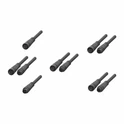
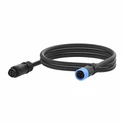
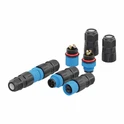
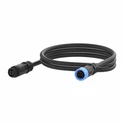
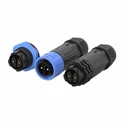
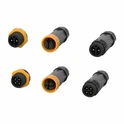
Waterproof connectors, as key sealing interface components in electronic devices, play an irreplaceable role in industrial automation, automotive electronics, medical equipment, outdoor communications, and other fields.As electronic devices evolve towards high reliability, miniaturization, and application in complex environments, technical research on waterproof connectors continues to deepen, and performance optimization and innovation have become key industry priorities.
Recently, significant progress has been made in the material science of waterproof connectors. Traditional connectors often utilize a combination of engineering plastics and metal plating. However, new polymer materials such as fluororubber, silicone rubber, and polyurethane are widely used in sealing structural designs due to their excellent weather resistance, aging resistance, and elastic modulus. Furthermore, the introduction of nanocomposites has further enhanced the wear resistance and chemical stability of connectors, enabling them to maintain reliable waterproof performance even in extreme environments.
In terms of structural design, researchers have developed multi-stage waterproof structures by optimizing contact layout and sealing paths, such as double O-ring seals, thread-locking pressurized seals, and elastomer pre-compression technology, effectively reducing the risk of water vapor permeation. The trend toward miniaturization has driven the compact design of waterproof connectors, such as M8/M12 circular connectors and modular rectangular connectors. These connectors achieve higher levels of integration while maintaining IP67/IP68 protection ratings.
Testing and standardization are another key area of waterproof connector research. International standards such as IEC 60529 (IP ratings) and MIL-STD-810G (environmental suitability testing) provide a basis for evaluating product reliability, while companies further verify the long-term stability of connectors through accelerated aging tests, high-pressure water jet tests, and vibration and shock tests.
In the future, the development of waterproof connectors will focus on intelligent and multifunctional integration, such as integrating sensors to monitor connection status or integrating with wireless charging technology to expand application scenarios. With the advancement of 5G, new energy vehicles, and marine engineering, technological breakthroughs in high-performance waterproof connectors will continue to provide critical support for various industries.