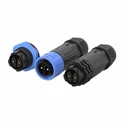
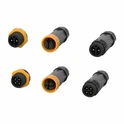
With the rapid development of global industrial automation, new energy vehicles, and outdoor electronic devices, waterproof connectors, as key foundational components, are experiencing a dual trend of technological upgrading and expanding demand.
On a technical level, high-performance materials and intelligent design are becoming key priorities. Traditional waterproof connectors rely on rubber seals and mechanical compression structures. Newer generations are utilizing novel materials such as nano-coatings and fluororubber, combined with laser welding and integrated molding processes, to elevate protection levels from IP67 to IP68 and even higher, meeting the demands of demanding environments like deep sea and extreme climates. Meanwhile, intelligent waterproof connectors with integrated sensors and data transmission capabilities are gaining popularity. These connectors provide real-time monitoring of temperature, current, and connection status, ensuring reliability for the Industrial Internet of Things (IIoT).
Regarding market demand, growth is driven by the new energy and consumer electronics sectors. New energy vehicles place extremely stringent requirements on waterproofing high-voltage wiring harness connectors, with the number of such connectors used per vehicle increasing by 3-5 times compared to traditional fuel-powered vehicles. The long-term outdoor operation of photovoltaic and energy storage systems has also generated a steady demand for highly corrosion-resistant waterproof connectors. Furthermore, the trend toward miniaturization in outdoor cameras, 5G base stations, and portable electronic devices is driving a rapid increase in the market share of miniaturized waterproof connectors (e.g., sizes under M12).
In terms of the competitive landscape, domestic manufacturers are accelerating their technological breakthroughs. While European and American companies have long dominated the high-end market, domestic companies, through increased R&D investment, have established advantages in cost-effectiveness and localized services. Some leading manufacturers have already entered the supply chains of companies like Tesla and Huawei. In the future, with the global coordination of industry standards (such as IEC 60529), waterproof connectors will develop towards standardization and modularization, further reducing application costs.
In summary, the waterproof connector industry is at a critical stage of technological evolution and explosive demand. Companies that master core materials and intelligent design capabilities will dominate the new round of competition.