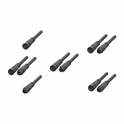
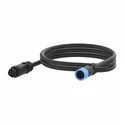
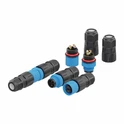
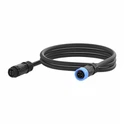
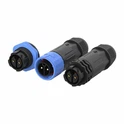
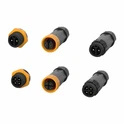
Waterproof connectors are critical sealing components in electronic devices, and their synthesis methods directly impact the product's weather resistance, insulation, and mechanical strength. This article systematically explains the core synthesis processes for waterproof connectors, covering material selection, structural design, and manufacturing processes.
Material selection is fundamental. The housing is typically made of high-strength engineering plastics (such as PA66 and PBT) or nickel-plated copper alloy. The former incorporates glass fiber for enhanced impact resistance, while the latter relies on the dual advantages of metallic conductivity and corrosion-resistant coatings. Silicone rubber or fluororubber are commonly used as sealing materials, and their compression set must be below 15% to ensure sealing performance even after long-term compression.
Structural design must balance functionality and processability. Typical solutions include a double nested O-ring structure, with inner and outer silicone rings forming a stepped seal; or a combination of threads and elastic gaskets, which generate radial compression during tightening. Key contacts are pre-plated with gold or tin to prevent oxidation and reduce contact resistance. Drain grooves are designed on the insulator to drain liquids.
The synthesis process consists of two stages: precision molding and assembly. When injection molding the housing, the mold temperature must be controlled between 80-120°C to minimize sink marks, and the injection pressure must be maintained between 80-150 MPa to ensure uniform filling. The seal is formed by compression vulcanization at a temperature of 170-190°C, cross-linking the rubber molecular chains to form a stable network structure. During the final assembly phase, crimping or welding must be performed in a dust-free environment, and the leakage rate must be verified using an airtightness tester (typically requiring ≤1×10⁻⁶ mbar·L/s).
Modern waterproof connector assembly technology is evolving towards lightweight and intelligent design. For example, self-diagnostic products with embedded humidity sensors are now practical. Strictly adhering to these assembly methods ensures that the connector achieves IP68 protection in temperatures ranging from -40°C to 125°C, meeting the requirements of industrial applications.