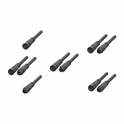
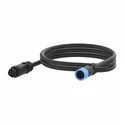
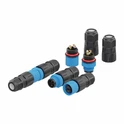
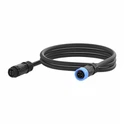
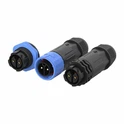
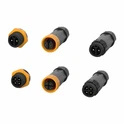
Waterproof connectors, as critical sealing components in electronic devices, are widely used in industrial, automotive, and communications applications.Their logistics characteristics directly impact product transportation safety and delivery efficiency. Because waterproof connectors typically feature sophisticated structures and high protection ratings (such as IP67/IP68), particular attention must be paid to their physical protection, environmental adaptability, and regulatory compliance during logistics.
From a logistics perspective, the core challenges for waterproof connectors lie in shock, moisture, and anti-static protection. These products often utilize metal or high-strength plastic housings and contain delicate contacts. These components are susceptible to structural deformation or seal failure due to collisions and compression during transportation. Therefore, packaging design must comply with transportation testing standards such as ISTA 3A. These products are typically wrapped in multiple layers of cushioning materials (such as EPE foam or bubble wrap) and placed in anti-static bags or metal shielding boxes. Outer boxes must be labeled "Fragile," "Moisture-Proof," and marked with an upward-pointing arrow to ensure compliance during storage and handling.
In terms of environmental adaptability, waterproof connectors are sensitive to temperature and humidity fluctuations. During long-distance transportation, especially by sea or overland transport due to significant seasonal temperature swings between north and south, it is crucial to prevent condensation from entering the packaging. Some high-end products require constant temperature and humidity for transportation, and logistics providers must provide warehousing services with documented temperature control. Furthermore, exported products must comply with international protection standards (such as IEC 60529) and the destination country's certification requirements (such as UL and CE). Test reports and compliance documentation must be submitted simultaneously throughout the logistics process.
In supply chain management, waterproof connector logistics prioritizes professional electronic component distributors or logistics providers with MSDS (Material Safety Data Sheet) capabilities. For urgent orders, air freight, while more expensive, can shorten shipping times. For larger shipments, reinforced ocean containers are recommended, with partitioned and fixed sections to reduce the risk of turbulence. In short, the logistics of waterproof connectors requires not only basic transportation capabilities but also a deep understanding of product characteristics and comprehensive protection design.