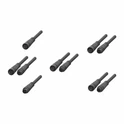
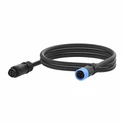
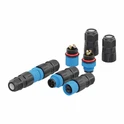
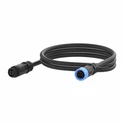
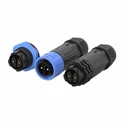
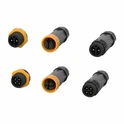
With the rapid development of industrial automation, smart devices, and outdoor electronics worldwide, waterproof connectors, as key electronic components, play an irreplaceable role in ensuring stable equipment operation and extending their service life.Their industry background and significance are not only reflected in technological innovation but are also closely related to the practical needs of various application areas.
From an industry perspective, the rise of waterproof connectors stems from the widespread use of electronic devices in harsh environments. Traditional connectors are susceptible to corrosion and short circuits in humid, dusty, or underwater environments. Waterproof connectors, however, utilize special sealing structures (such as rubber rings, potting compounds, or metal housings) to effectively block moisture and particulate matter, ensuring stable current and signal transmission. In recent years, emerging sectors such as new energy vehicles, marine engineering, medical equipment, and 5G communications have significantly increased the protection requirements for connectors, driving the development of waterproof connectors towards high precision, miniaturization, and resistance to extreme environments. For example, products with IP68 and even higher protection levels have become the industry standard to meet the stringent requirements of deep-sea exploration and outdoor base stations.
The industry significance of waterproof connectors lies primarily in three aspects: safety, reliability, and cost-effectiveness. First, they effectively prevent fires or equipment damage caused by electrical failures, which is particularly crucial in high-risk scenarios such as industrial robots and photovoltaic power generation systems. Second, stable connectivity reduces maintenance costs and downtime, improving the user experience of end products such as outdoor LED displays or action cameras. Finally, advancements in materials science (such as fluororubber seals) and manufacturing processes (such as laser welding) are reducing the cost of waterproof connectors, further driving their adoption in consumer electronics.
In the future, with the accelerated development of the Internet of Things (IoT) and smart cities, waterproof connectors will continue to evolve towards multifunctional integration (such as integrated data and power) and environmentally friendly materials (such as halogen-free designs). The growth of this market segment not only reflects the electronics industry's growing demand for environmental adaptability but also serves as a key indicator of a country's high-end manufacturing capabilities.