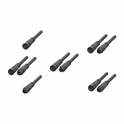
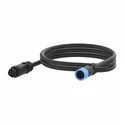
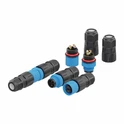
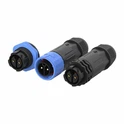
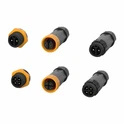
Waterproof connectors are critical sealed connection components in electrical equipment, and their performance directly impacts the safety and reliability of the equipment.To ensure product quality, numerous stringent implementation standards have been established globally, covering materials, structural design, testing methods, and environmental adaptability.
Internationally, waterproof connectors primarily adhere to the IEC (International Electrotechnical Commission) and IP (Ingress Protection) ratings. IP67 and IP68 are the most common waterproof ratings, indicating that connectors can withstand temporary immersion in water up to 1 meter deep (for up to 30 minutes) or prolonged immersion in deeper water, respectively. Furthermore, the US military standard MIL-DTL-38999 and UL (Underwriters Laboratories) certifications also specify requirements for waterproof connectors' high-temperature resistance, corrosion resistance, and mechanical strength.
The European market generally adopts EN (European Standard) and DIN (German Industrial Standard), emphasizing connectors' weather resistance, vibration resistance, and long-term aging performance. For example, EN 60529 defines detailed testing conditions for ingress protection levels, while DIN specifically addresses the high-reliability demands of the automotive and industrial sectors. Domestically, China's national standard GB/T 4208 defines the degree of protection provided by enclosures (IP code), which is largely consistent with IEC 60529. Furthermore, industry standards such as JB/T 8139 clearly define the electrical parameters, sealing materials, and mechanical lifespan of waterproof connectors. Some high-end products also require RoHS (Restriction of Hazardous Substances) and REACH (Registration and Assessment of Chemicals) environmental certification to ensure compliance with sustainable development requirements.
Strict implementation of these standards not only ensures the stable operation of waterproof connectors in harsh environments but also provides a unified quality assessment basis for the industry. In the future, as technology advances, relevant standards will continue to be optimized to meet the increasing demands of emerging sectors such as new energy and 5G communications.