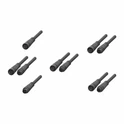
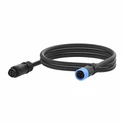
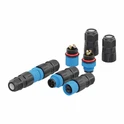
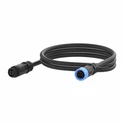
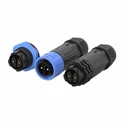
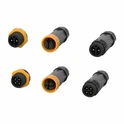
As a critical connector component in electrical equipment, waterproof connectors' production processes directly impact their sealing, durability, and reliability. A comprehensive waterproof connector production process encompasses multiple steps, including material selection, precision machining, assembly, and rigorous testing, ensuring stable performance in harsh environments.
Material preparation and pretreatment are the first steps in production. High-quality copper alloys or stainless steel are typically used for contacts to ensure excellent conductivity and corrosion resistance. Housings are often constructed from high-strength engineering plastics (such as PA66 and PBT) or aluminum alloys to meet waterproofing and mechanical strength requirements. Materials undergo pretreatment, including cleaning and deoxidation, to prevent impurities and corrosion during subsequent processing.
Precision machining stages include stamping, injection molding, and metal forming. Contacts are formed into precise terminal shapes using high-speed stamping machines. Electroplating (such as gold or nickel) may be applied to enhance oxidation resistance and conductivity. Housings and insulators are injection molded, and mold accuracy directly impacts waterproofing performance. Metal housings may require CNC turning or die-casting to ensure micron-level dimensional tolerances. The assembly process is crucial for waterproof performance. After the contacts and insulators are assembled, they are pre-pressed in specialized equipment and then secured to the housing via threads, snaps, or ultrasonic welding. Sealing rings (such as silicone or rubber) must be installed precisely to ensure gaps are eliminated. Some high-end products also incorporate epoxy resin injection for secondary sealing.
Quality testing includes air tightness testing, pressure testing, and mechanical life testing. The air tightness test uses high-pressure gas to measure leakage rates and typically requires IP67 or IP68 protection ratings. The pressure test verifies insulation performance, while the mechanical life test simulates multiple mating cycles to ensure long-term stability.
Through this rigorous process, waterproof connectors ultimately meet high reliability standards and are widely used in automotive, industrial equipment, outdoor communications, and other fields, providing long-lasting protection for electrical connections.