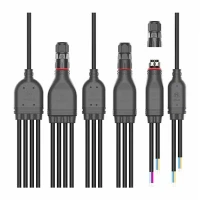
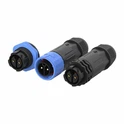
Hey there! As a supplier of bulk shunt connectors, I often get asked if these connectors can be used in industrial automation. Well, let's dive right into it and find out.
First off, what are bulk shunt connectors? They're basically connectors designed to handle multiple electrical connections in a single unit. They're great for simplifying wiring systems and making installations more efficient. You can think of them as the Swiss Army knives of the electrical connection world – they do a lot of jobs all at once.
Now, let's talk about industrial automation. This is a field that's all about using control systems, like computers or robots, to handle different industrial processes and machinery. It's all over the place in factories, from assembly lines to packaging operations. The goal is to boost productivity, cut down on errors, and make things run more smoothly.
So, can bulk shunt connectors be used in industrial automation? The answer is a big yes! There are several reasons why these connectors are a great fit for this field.
1. High - Density Connectivity
In industrial automation, space is often at a premium. You've got a bunch of sensors, actuators, and other devices that need to be connected, but you don't have a ton of room to work with. Bulk shunt connectors are perfect because they can pack a large number of connections into a relatively small space. For example, if you're setting up a control panel with multiple sensors, a bulk shunt connector can connect all of them without taking up too much real - estate.
2. Simplified Installation
Time is money in the industrial world. The longer it takes to install a wiring system, the more it costs. Bulk shunt connectors simplify the installation process. Instead of having to connect each wire individually, you can use a single connector to handle multiple connections at once. This not only saves time but also reduces the chances of making mistakes during the installation.
3. Reliability
Industrial automation systems need to be reliable. A single connection failure can lead to a breakdown in the entire process, causing delays and losses. Bulk shunt connectors are designed to provide a stable and secure connection. They're built to withstand harsh industrial environments, including vibrations, temperature changes, and electrical interference.
4. Flexibility
Industrial automation setups can be complex and ever - changing. You might need to add or remove sensors or other devices as the production process evolves. Bulk shunt connectors offer the flexibility to make these changes easily. You can simply disconnect and reconnect the connector as needed, without having to re - wire the entire system.
Let's take a look at some specific types of bulk shunt connectors that are commonly used in industrial automation.


One popular option is the M25 3+9pin Waterproof Connector. This connector is great for applications where you need to protect the connections from water and dust. In a factory environment, there might be areas where there's a risk of splashes or high humidity, and this waterproof connector can ensure that the electrical connections remain stable.
Another useful connector is the M15 4pin Waterproof Connector. It's smaller in size but still offers a reliable connection. This can be handy for applications where space is extremely limited, like in some compact sensor setups.
If you're dealing with data transmission in industrial automation, the RJ45 Waterproof Connector is a great choice. It can handle high - speed data transfer while also being protected from the elements. This is important for connecting devices like industrial Ethernet switches and cameras.
However, like any technology, there are also some considerations when using bulk shunt connectors in industrial automation.
Compatibility
You need to make sure that the bulk shunt connectors you choose are compatible with the devices and systems you're using. Different sensors and actuators might have different voltage and current requirements, and the connector needs to be able to handle these.
Maintenance
Even though bulk shunt connectors are designed to be reliable, they still need regular maintenance. You should check for any signs of wear and tear, loose connections, or corrosion. If left unchecked, these issues can lead to connection failures.
Cost
While bulk shunt connectors can save you money in the long run by reducing installation time and improving reliability, they can have a higher upfront cost compared to traditional single - wire connections. You need to weigh the benefits against the cost to see if it's the right choice for your specific application.
In conclusion, bulk shunt connectors are a great option for industrial automation. They offer high - density connectivity, simplified installation, reliability, and flexibility. With the right choice of connectors like the M25 3+9pin Waterproof Connector, M15 4pin Waterproof Connector, and RJ45 Waterproof Connector, you can ensure a smooth and efficient industrial automation system.
If you're interested in learning more about our bulk shunt connectors or are looking to make a purchase, don't hesitate to reach out. We're here to help you find the right connectors for your industrial automation needs. Whether you're setting up a new system or upgrading an existing one, we've got the solutions you're looking for. Let's start a conversation and see how we can work together to improve your industrial processes.
References
- Industrial Automation Handbook, 3rd Edition
- Electrical Connectors: Principles and Applications, 2nd Edition