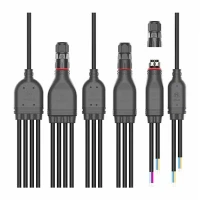
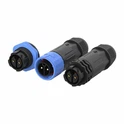
In the world of electrical and electronic systems, the choice of connection methods is crucial for ensuring the reliable operation of devices. As a supplier of series connectors, I've witnessed firsthand the importance of these components in various applications. In this blog, I'll delve into how series connectors stack up against other connection methods in terms of reliability.
Understanding Series Connectors
Series connectors are designed to link multiple components or devices in a sequential manner. They provide a continuous electrical path, allowing current to flow through each connected element in turn. This type of connection is commonly used in applications where a stable and consistent electrical signal is required, such as in industrial automation, automotive electronics, and telecommunications.
One of the key advantages of series connectors is their simplicity. They typically consist of a male and female connector that can be easily mated and unmated, making them convenient for installation and maintenance. Additionally, series connectors are available in a wide range of sizes, shapes, and configurations, allowing for flexibility in design and application.
Comparing Series Connectors to Other Connection Methods
Solder Joints
Solder joints are a traditional method of connecting electrical components. They involve melting a metal alloy (solder) to create a permanent bond between two or more conductors. While solder joints can provide a strong and reliable connection, they also have several limitations.
One of the main drawbacks of solder joints is their lack of flexibility. Once a solder joint is made, it is difficult to modify or repair without damaging the components. This can be a problem in applications where changes or upgrades are required. Additionally, solder joints are susceptible to mechanical stress and vibration, which can cause them to crack or break over time.
In contrast, series connectors offer a more flexible and reliable solution. They can be easily disconnected and reconnected, allowing for quick and easy maintenance and repair. Series connectors also provide a more secure connection than solder joints, as they are designed to withstand mechanical stress and vibration.
Wire Wrapping
Wire wrapping is another method of connecting electrical components. It involves wrapping a thin wire around a terminal post or pin to create an electrical connection. Wire wrapping is a simple and cost-effective method, but it also has several limitations.
One of the main drawbacks of wire wrapping is its limited durability. The wire can become loose or break over time, especially in applications where there is a lot of movement or vibration. Additionally, wire wrapping is not suitable for high-speed or high-frequency applications, as it can introduce signal interference.
Series connectors, on the other hand, are designed to provide a more reliable and durable connection. They are made from high-quality materials and are designed to withstand a wide range of environmental conditions. Series connectors also offer a more secure connection than wire wrapping, as they are designed to prevent the wire from becoming loose or disconnected.
Crimp Connections
Crimp connections involve using a special tool to compress a metal sleeve around a wire and a terminal to create an electrical connection. Crimp connections are a popular method of connecting electrical components, as they are relatively easy to install and provide a reliable connection.
However, crimp connections also have several limitations. One of the main drawbacks of crimp connections is their susceptibility to corrosion. The metal sleeve can corrode over time, especially in applications where there is exposure to moisture or chemicals. Additionally, crimp connections can be difficult to inspect, as it can be challenging to determine if the connection is secure.
Series connectors offer a more reliable and corrosion-resistant solution. They are made from materials that are resistant to corrosion and are designed to provide a secure and reliable connection. Series connectors also offer a more visible and accessible connection than crimp connections, making it easier to inspect and maintain.
The Reliability of Our Series Connectors
As a supplier of series connectors, we take pride in offering high-quality products that are designed to provide reliable performance in a wide range of applications. Our series connectors are made from high-quality materials and are manufactured to strict quality standards to ensure their durability and reliability.


We offer a wide range of series connectors, including the M18 Straight Type Waterproof Connector, the M20 T Type Waterproof Connector, and the M16 Straight Type Waterproof Connector. These connectors are designed to provide a secure and reliable connection in harsh environments, such as those found in industrial automation, automotive electronics, and outdoor applications.
Our series connectors are also designed to be easy to install and maintain. They feature a simple and intuitive design that allows for quick and easy connection and disconnection. Additionally, our series connectors are available in a variety of configurations and sizes, allowing for flexibility in design and application.
Conclusion
In conclusion, series connectors offer several advantages over other connection methods in terms of reliability. They provide a more flexible, durable, and secure connection than solder joints, wire wrapping, and crimp connections. As a supplier of series connectors, we are committed to providing high-quality products that are designed to meet the needs of our customers.
If you are looking for a reliable and cost-effective solution for your electrical connection needs, we invite you to contact us to discuss your requirements. Our team of experts will be happy to help you select the right series connector for your application and provide you with the support and assistance you need to ensure its successful installation and operation.
References
- Grob, Bernard. "Grob's Basic Electronics." McGraw-Hill Education, 2017.
- Nilsson, James W., and Susan A. Riedel. "Electric Circuits." Pearson, 2019.
- Terman, Frederick Emmons. "Radio Engineers' Handbook." McGraw-Hill, 1943.