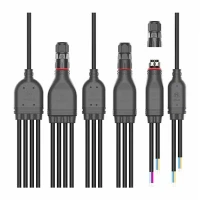
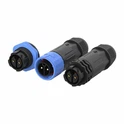
Hey there! As a supplier of Bulk splitter connectors, I often get asked about what materials are used to make these nifty little devices. So, I thought I'd take a moment to break it down for you.
First off, let's talk about the outer housing. This is the part that protects the internal components of the Bulk splitter connector from the elements and physical damage. One of the most common materials used for the outer housing is plastic. Plastic is a great choice because it's lightweight, durable, and relatively inexpensive. It can also be easily molded into different shapes and sizes, which is important for creating connectors that fit specific applications.
There are different types of plastics used in Bulk splitter connectors. One popular option is polycarbonate. Polycarbonate is known for its high impact resistance and excellent clarity. It can withstand a fair amount of abuse without cracking or breaking, making it ideal for connectors that might be exposed to rough handling or harsh environments. Another type of plastic is acrylonitrile butadiene styrene (ABS). ABS is a tough and rigid plastic that offers good chemical resistance. It's also easy to machine and paint, which allows for customization of the connector's appearance.
Now, let's move on to the internal conductors. These are the parts that carry the electrical signals through the connector. Copper is the go - to material for conductors in Bulk splitter connectors. Copper is an excellent conductor of electricity, which means it allows the electrical current to flow smoothly with minimal resistance. This is crucial for maintaining signal integrity, especially in high - speed data transmission applications.
Copper comes in different grades, and the purity of the copper can affect its conductivity. High - purity copper, such as oxygen - free copper (OFC), is often used in high - end Bulk splitter connectors. OFC has very few impurities, which results in better electrical performance. The conductors are usually coated with a thin layer of tin or silver. Tin coating helps to prevent oxidation, which can degrade the electrical performance over time. Silver coating, on the other hand, offers even better conductivity than tin, but it's more expensive.


Insulation is another important component of Bulk splitter connectors. The insulation material separates the conductors from each other and from the outer housing, preventing short circuits. One commonly used insulation material is polyethylene. Polyethylene has good dielectric properties, which means it can effectively isolate the electrical signals. It's also flexible, which makes it easy to work with during the manufacturing process.
Another option for insulation is fluoropolymers, such as polytetrafluoroethylene (PTFE). PTFE is well - known for its excellent electrical insulation properties and its resistance to high temperatures and chemicals. It's often used in connectors for applications where the operating conditions are extreme, like in aerospace or military equipment.
Sealing materials are also a key part of Bulk splitter connectors, especially if they are designed for waterproof or dust - proof applications. Silicone rubber is a popular choice for sealing. Silicone rubber has good elasticity and can form a tight seal around the connector components. It can withstand a wide range of temperatures and is resistant to aging and weathering. This ensures that the connector remains protected from moisture and dust over its lifespan.
Now, I want to mention some of the specific types of connectors we offer. We have the M15 F Type Waterproof Connector, which is designed to handle high - power applications while keeping the elements out. The outer housing is made of a tough plastic that can withstand harsh outdoor conditions, and the internal conductors are made of high - quality copper for reliable signal transmission.
Our M15 T Type Waterproof Connector is another great option. It features a unique T - shaped design that allows for easy installation in tight spaces. The insulation material used in this connector ensures excellent signal isolation, and the silicone rubber sealing provides a watertight barrier.
If you're looking for a connector that can split the signal in multiple directions, our Y Type Waterproof Connector is a top choice. It's made with the same high - quality materials as our other connectors, including a durable plastic housing, copper conductors, and effective insulation and sealing.
In conclusion, the materials used to make Bulk splitter connectors play a crucial role in their performance and durability. From the outer housing to the internal conductors and insulation, each component is carefully selected to ensure that the connector meets the specific requirements of different applications.
If you're in the market for Bulk splitter connectors or have any questions about our products, don't hesitate to reach out. We're here to help you find the right connector for your needs and can provide more detailed information about the materials and their properties. Whether you're working on a small - scale project or a large - scale industrial application, we've got you covered.
References:
- "Handbook of Electronic Connector Design and Applications"
- "Materials Science for Electrical Engineers"