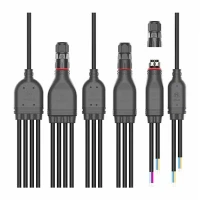
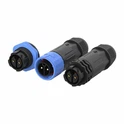
When it comes to electrical systems, bulk shunt connectors play a crucial role in ensuring efficient and safe current distribution. As a leading supplier of bulk shunt connectors, I understand the importance of having a comprehensive understanding of the standard sizes available in the market. In this blog post, I will delve into the various standard sizes of bulk shunt connectors, their applications, and why choosing the right size is essential for your electrical projects.
Understanding Bulk Shunt Connectors
Bulk shunt connectors are electrical components used to measure current in a circuit. They work by providing a low - resistance path for current to flow through, allowing a small voltage drop to be measured across the shunt. This voltage drop is then used to calculate the current flowing through the circuit according to Ohm's Law (V = IR). These connectors are commonly used in a wide range of applications, including power distribution systems, battery management systems, and industrial automation.
Standard Sizes of Bulk Shunt Connectors
The standard sizes of bulk shunt connectors can vary depending on several factors, such as the maximum current capacity, voltage rating, and physical dimensions. Here are some of the most common standard sizes:
1. Low - Current Bulk Shunt Connectors
For applications that require measuring relatively low currents, shunt connectors with a current capacity ranging from a few milliamperes to a few amperes are available. These shunt connectors typically have a resistance value in the range of milliohms to ohms. For example, a shunt connector with a current capacity of 1A and a resistance of 100 milliohms can be used in small - scale electronic devices, such as portable chargers or IoT sensors.
2. Medium - Current Bulk Shunt Connectors
Medium - current shunt connectors are designed to handle currents in the range of several amperes to a few hundred amperes. These connectors are commonly used in automotive electrical systems, power supplies, and small - to - medium - sized industrial equipment. A shunt connector with a current capacity of 50A and a resistance of 10 milliohms might be used in an electric vehicle's battery management system to monitor the charging and discharging currents.
3. High - Current Bulk Shunt Connectors
In high - power applications, such as large - scale power distribution systems, industrial machinery, and renewable energy systems, high - current shunt connectors are required. These connectors can handle currents in the range of hundreds of amperes to thousands of amperes. A shunt connector with a current capacity of 1000A and a resistance of 1 milliohm might be used in a solar power plant's inverter to measure the DC current output.
Physical Dimensions and Mounting Options
In addition to the current capacity and resistance, the physical dimensions and mounting options of bulk shunt connectors are also important considerations. Standard sizes can vary in terms of length, width, and height, as well as the type of mounting holes or terminals. Some shunt connectors are designed for surface - mount applications, while others are intended for through - hole mounting on printed circuit boards (PCBs). There are also shunt connectors that come with screw - terminal or bolt - on mounting options for easy installation in larger electrical systems.
Choosing the Right Standard Size
Selecting the right standard size of bulk shunt connector is crucial for the proper functioning and safety of your electrical system. Here are some factors to consider:
1. Current Rating
The first and most important factor is the maximum current that the shunt connector needs to handle. Make sure to choose a shunt connector with a current rating that is higher than the expected maximum current in your application to prevent overheating and damage.
2. Resistance Value
The resistance value of the shunt connector affects the voltage drop across it and, consequently, the accuracy of the current measurement. Choose a resistance value that is appropriate for your measurement requirements. A lower resistance value will result in a smaller voltage drop but may require more sensitive measurement equipment.


3. Physical Space
Consider the available physical space in your electrical system. Make sure that the shunt connector you choose can fit into the designated area without causing any interference with other components.
4. Environmental Conditions
If your application is exposed to harsh environmental conditions, such as high temperatures, humidity, or vibration, choose a shunt connector that is designed to withstand these conditions. For example, some shunt connectors are waterproof and can be used in outdoor or marine applications. You can explore our T Molding Type Waterproof Connector, Y Type Waterproof Connector, and M15 F Type Waterproof Connector for such applications.
Our Product Range
As a supplier of bulk shunt connectors, we offer a wide range of standard sizes to meet the diverse needs of our customers. Our products are manufactured using high - quality materials and advanced manufacturing processes to ensure reliability and accuracy. Whether you need a low - current shunt connector for a small - scale electronic project or a high - current shunt connector for a large - scale industrial application, we have the right solution for you.
Contact Us for Procurement
If you are in the market for bulk shunt connectors and need assistance in choosing the right standard size for your application, our team of experts is here to help. We can provide you with detailed product information, technical support, and competitive pricing. Contact us today to start a procurement discussion and find the perfect bulk shunt connectors for your electrical projects.
References
- Electrical Engineering Handbook, Third Edition, edited by Richard C. Dorf
- Power Electronics: Converters, Applications, and Design, Third Edition, by Ned Mohan, Tore M. Undeland, and William P. Robbins