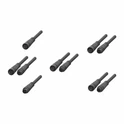
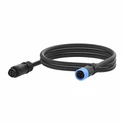
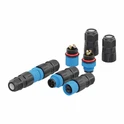
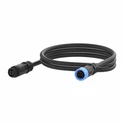
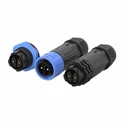
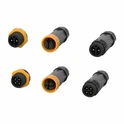
As a crucial component in modern electrical connection technology, waterproof connectors ensure safe and stable current and signal transmission in wet, underwater, or high-humidity environments.With the rapid development of industrial automation, outdoor equipment, and marine engineering, demand for waterproof connectors is growing, and their unique technical features make them an indispensable component in many critical applications.
Excellent Waterproof Performance
The most notable feature of waterproof connectors is their exceptional waterproofness. Through sophisticated structural designs such as seals, thread locking mechanisms, and multi-layered waterproof barriers, these connectors effectively prevent the intrusion of moisture, dust, and other contaminants. International standards such as IP67 or IP68 are commonly used to measure their protection levels, with IP68-rated connectors maintaining reliable performance even after prolonged deep water immersion. This feature makes them widely used in harsh environments such as underwater equipment, marine systems, and outdoor communication base stations.
Durability and Mechanical Strength
Waterproof connectors are typically manufactured from high-strength materials such as nickel-plated copper alloy, stainless steel, or high-performance engineering plastics to ensure long-term stability under vibration, shock, and extreme temperatures. Furthermore, their structural designs often incorporate anti-loosening mechanisms, such as threaded connections or snap-on locks, to prevent the risk of poor contact or disconnection due to mechanical stress. This feature makes them highly sought after in high-reliability applications such as industrial machinery, automotive electronics, and military equipment.
Excellent Electrical Performance
In addition to waterproof and mechanical properties, waterproof connectors must also meet stringent electrical performance requirements. They feature extremely low contact resistance, enabling high current transmission without excessive heat generation, while also providing excellent insulation to prevent short circuits and leakage. Some high-end products are also optimized for high-frequency signal transmission, ensuring data communication stability and interference resistance. These features make them suitable for precision technology applications such as medical equipment, new energy systems, and high-speed data transmission networks.
Environmental Adaptability and Versatility
Waterproof connectors are designed with diverse environmental requirements in mind. Some products can operate in extreme temperature ranges (e.g., -40°C to +125°C) and are resistant to salt spray, acids, and alkalis, meeting the challenges of chemical, marine, or desert environments. Furthermore, their modular design allows for flexible adaptation to different cable and interface standards, meeting the customized needs of diverse industries.
Application Prospects and Value
The widespread use of waterproof connectors not only improves device reliability in harsh environments but also significantly reduces maintenance costs and the risk of failure. From consumer electronics (such as waterproof smartphone charging ports) to large-scale infrastructure (such as submarine cable connectors), technological advancements continue to drive greater safety and durability across various industries. In the future, with further advances in materials science and connection technology, waterproof connectors will demonstrate even greater potential in terms of intelligence, miniaturization, and high performance.
In summary, waterproof connectors, with their superior waterproofness, durability, electrical performance, and environmental adaptability, have become crucial components in modern electrical systems. Their technical advantages not only solve connection challenges in complex environments but also provide a solid foundation for innovation and development across various industries.