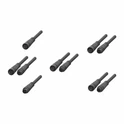
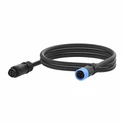
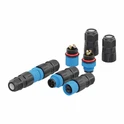
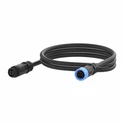
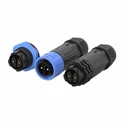
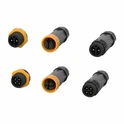
Waterproof connectors, as critical electronic components, are widely used in industrial, outdoor, and high-humidity environments.Their long-term reliability depends on well-defined maintenance cycles and standardized maintenance measures. Proper maintenance not only extends the service life but also ensures safe and stable operation of the equipment.
Recommended Maintenance Cycles
In general industrial environments, waterproof connectors are recommended to undergo a basic inspection every three to six months, including visual cleaning, seal condition assessment, and connection reliability testing. If the operating environment is subject to high corrosiveness (such as salt spray and chemical gases) or extreme temperature and humidity fluctuations (such as in outdoor or underground facilities), inspections should be shortened to monthly or quarterly, with particular attention paid to the aging of the sealing materials.
Deep Maintenance Cycles
Deep maintenance should be performed every one to two years. This includes disassembling the connector (if the design allows), thoroughly cleaning the contact oxide layer, replacing worn seals (typically, silicone or rubber materials have a lifespan of one to three years), and reapplying moisture-proof lubricant. Waterproof connectors that have not been used for an extended period must undergo waterproof performance testing (such as verification to IP67/IP68 standards) before reactivation.
Special Scenarios Precautions
High-frequency vibration environments (such as those exposed to construction machinery) can accelerate loosening of internal components. It is recommended to tighten connecting bolts every two to three months. Connectors subject to long-term immersion (such as underwater equipment) must strictly follow the manufacturer's maintenance guidelines, typically requiring professional testing of insulation resistance and withstand voltage every six months.
Regular maintenance and timely replacement of worn components significantly reduce the risk of connector failures due to water ingress and corrosion, ensuring long-term stable system operation.