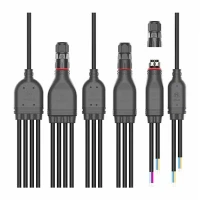
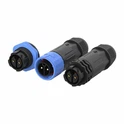
Insulation resistance is a critical parameter when it comes to bulk cable connectors. As a leading supplier of bulk cable connectors, we understand the importance of meeting the right insulation resistance requirements to ensure the safety, reliability, and performance of electrical systems. In this blog post, we will delve into the insulation resistance requirements for bulk cable connectors, exploring why they matter, how they are measured, and the standards that govern them.
Why Insulation Resistance Matters
Insulation resistance refers to the resistance offered by the insulating material between conductors in a cable connector. It is a measure of how well the insulation prevents the flow of electric current through it. A high insulation resistance indicates that the insulation is effective at preventing leakage current, which is crucial for several reasons.
Firstly, safety is a top priority in any electrical system. Leakage current can pose a significant risk of electric shock to users and can also lead to short circuits, which may cause fires or damage to equipment. By maintaining a high insulation resistance, we can minimize the risk of these hazards and ensure the safety of both the system and its users.
Secondly, insulation resistance is directly related to the performance of the electrical system. A low insulation resistance can result in signal loss, interference, and reduced efficiency. This can affect the accuracy and reliability of data transmission in communication systems, as well as the functionality of power distribution systems. Therefore, meeting the appropriate insulation resistance requirements is essential for maintaining the optimal performance of the system.
Measuring Insulation Resistance
Insulation resistance is typically measured using a megohmmeter, also known as a megger. A megger applies a test voltage to the insulation and measures the resulting current flow. The insulation resistance is then calculated using Ohm's law (R = V / I), where R is the resistance, V is the test voltage, and I is the current.
The test voltage used for measuring insulation resistance depends on the type of cable connector and the application. For low-voltage systems, a test voltage of 500 V or 1000 V is commonly used. For high-voltage systems, higher test voltages may be required. It is important to follow the manufacturer's recommendations and industry standards when selecting the test voltage to ensure accurate and reliable measurements.
Standards and Requirements
There are several international and national standards that specify the insulation resistance requirements for bulk cable connectors. These standards are developed by organizations such as the International Electrotechnical Commission (IEC), the Institute of Electrical and Electronics Engineers (IEEE), and the National Electrical Code (NEC).
The IEC 60502 standard, for example, provides requirements for power cables with extruded insulation and their accessories. It specifies the minimum insulation resistance values for different types of cables and operating voltages. Similarly, the IEEE 400 standard provides guidelines for testing and evaluation of the insulation of shielded power cables.
In addition to these general standards, specific industries may have their own requirements for insulation resistance. For example, the automotive industry has strict standards for the insulation resistance of wiring harnesses to ensure the safety and reliability of vehicles. The aerospace industry also has high requirements for insulation resistance to meet the demanding operating conditions of aircraft.
Insulation Resistance Requirements for Different Types of Bulk Cable Connectors
The insulation resistance requirements for bulk cable connectors can vary depending on the type of connector, the application, and the operating environment. Here are some examples of different types of bulk cable connectors and their typical insulation resistance requirements:
M15 F Type Waterproof Connector
The M15 F Type Waterproof Connector is designed for use in harsh environments where water and dust protection is required. It typically has a high insulation resistance to ensure reliable performance in wet and dirty conditions. The minimum insulation resistance for this type of connector is usually specified as 100 MΩ or higher at a test voltage of 500 V.
Y Type Waterproof Connector
The Y Type Waterproof Connector is commonly used in applications where multiple cables need to be connected in a Y-shaped configuration. It also requires a high insulation resistance to prevent leakage current and ensure proper signal transmission. The insulation resistance requirements for this type of connector are similar to those of the M15 F Type Waterproof Connector, with a minimum value of 100 MΩ or higher at 500 V.
M15 T Type Waterproof Connector
The M15 T Type Waterproof Connector is another type of waterproof connector that is often used in industrial and outdoor applications. It has a robust design and is capable of withstanding high levels of moisture and vibration. The insulation resistance requirements for this type of connector are typically in the range of 100 MΩ to 1000 MΩ at a test voltage of 500 V.
Factors Affecting Insulation Resistance
Several factors can affect the insulation resistance of bulk cable connectors. These include:
- Temperature: The insulation resistance of a cable connector decreases as the temperature increases. This is because the conductivity of the insulation material increases with temperature, leading to a higher leakage current. Therefore, it is important to consider the operating temperature range when specifying the insulation resistance requirements.
- Humidity: High humidity can also reduce the insulation resistance of a cable connector. Moisture can penetrate the insulation material and create conductive paths, resulting in a lower insulation resistance. Waterproof connectors are designed to minimize the effects of humidity, but it is still important to ensure proper installation and sealing to prevent water ingress.
- Contamination: Contamination from dirt, dust, and chemicals can also affect the insulation resistance of a cable connector. These contaminants can act as conductors and reduce the effectiveness of the insulation. Regular cleaning and maintenance of the connectors can help to prevent contamination and maintain the insulation resistance.
- Aging: Over time, the insulation material in a cable connector can degrade due to factors such as heat, humidity, and mechanical stress. This can lead to a decrease in the insulation resistance and an increased risk of failure. Therefore, it is important to monitor the insulation resistance of cable connectors regularly and replace them when necessary.
Ensuring Compliance with Insulation Resistance Requirements
As a bulk cable connector supplier, we are committed to providing our customers with products that meet or exceed the insulation resistance requirements. We use high-quality insulation materials and advanced manufacturing processes to ensure the reliability and performance of our connectors.
Before shipping our products, we conduct rigorous testing to verify the insulation resistance. We use state-of-the-art testing equipment and follow strict quality control procedures to ensure accurate and reliable results. Our products are also certified to meet the relevant international and national standards, giving our customers peace of mind knowing that they are using safe and reliable connectors.


In addition to providing high-quality products, we also offer technical support and advice to our customers. Our team of experts can help you select the right connector for your application and ensure that it is installed and maintained correctly. We can also assist you with any questions or concerns you may have regarding insulation resistance requirements.
Conclusion
Insulation resistance is a critical parameter for bulk cable connectors. It plays a crucial role in ensuring the safety, reliability, and performance of electrical systems. By understanding the insulation resistance requirements, measuring it accurately, and ensuring compliance with the relevant standards, we can minimize the risk of electrical hazards and maintain the optimal performance of the system.
As a leading supplier of bulk cable connectors, we are dedicated to providing our customers with high-quality products that meet the strictest insulation resistance requirements. Our range of M15 F Type Waterproof Connector, Y Type Waterproof Connector, and M15 T Type Waterproof Connector are designed to provide reliable performance in harsh environments.
If you are looking for a reliable bulk cable connector supplier, we invite you to contact us to discuss your specific requirements. Our team of experts will be happy to assist you in selecting the right connector for your application and provide you with a competitive quote. Let's work together to ensure the success of your electrical projects.
References
- IEC 60502 - Power cables with extruded insulation and their accessories for rated voltages from 1 kV (Um = 1.2 kV) up to 30 kV (Um = 36 kV)
- IEEE 400 - Guide for field testing and evaluation of the insulation of shielded power cables
- National Electrical Code (NEC)